
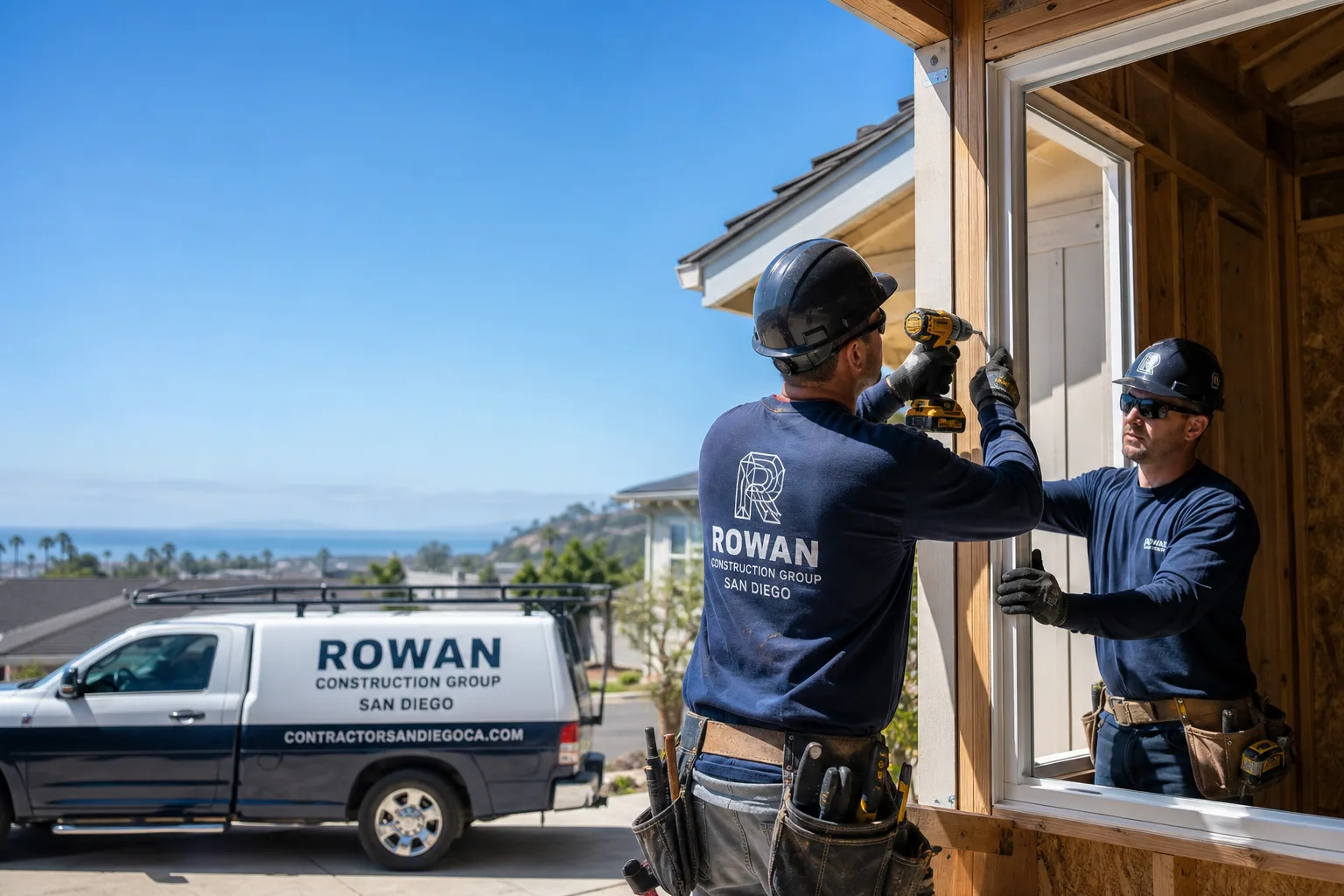
Free written scope consultation - allowances, timeline, and change-order rules on paper before a single trade is scheduled
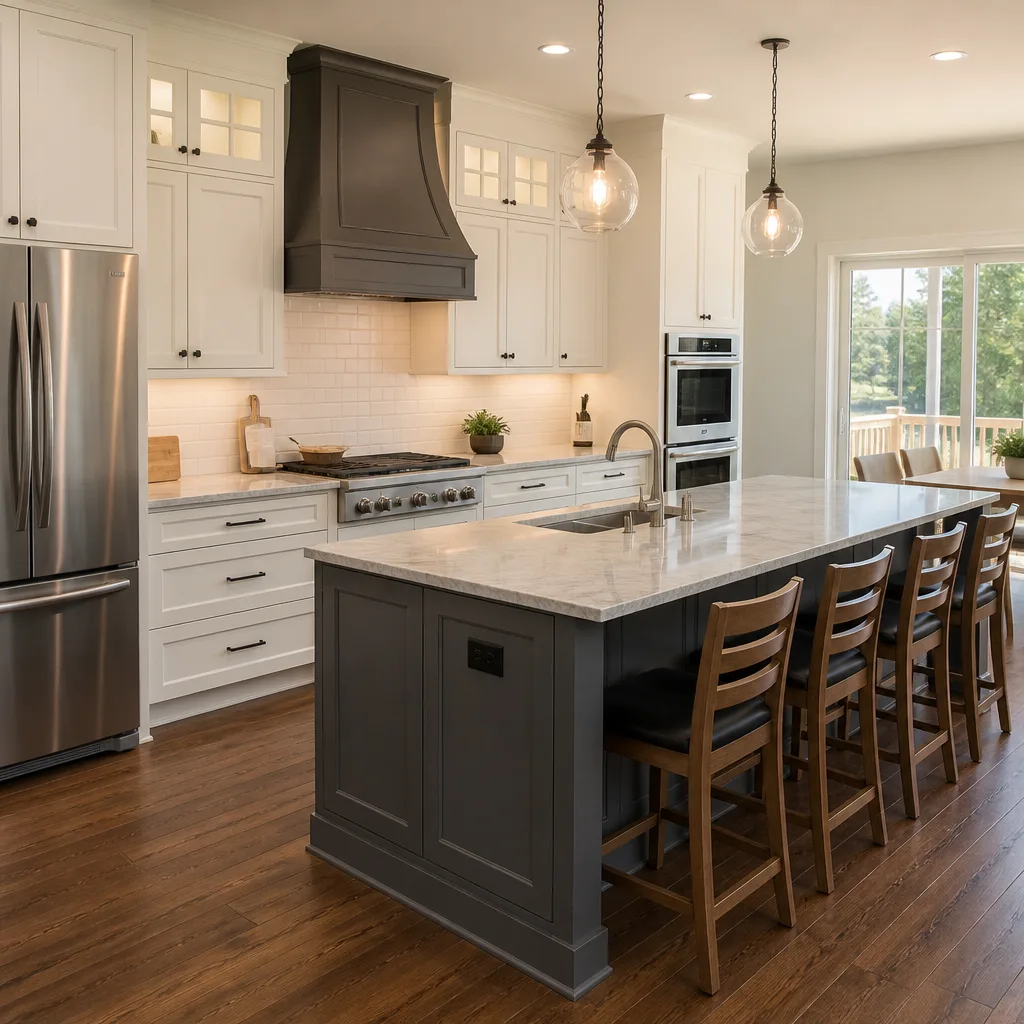
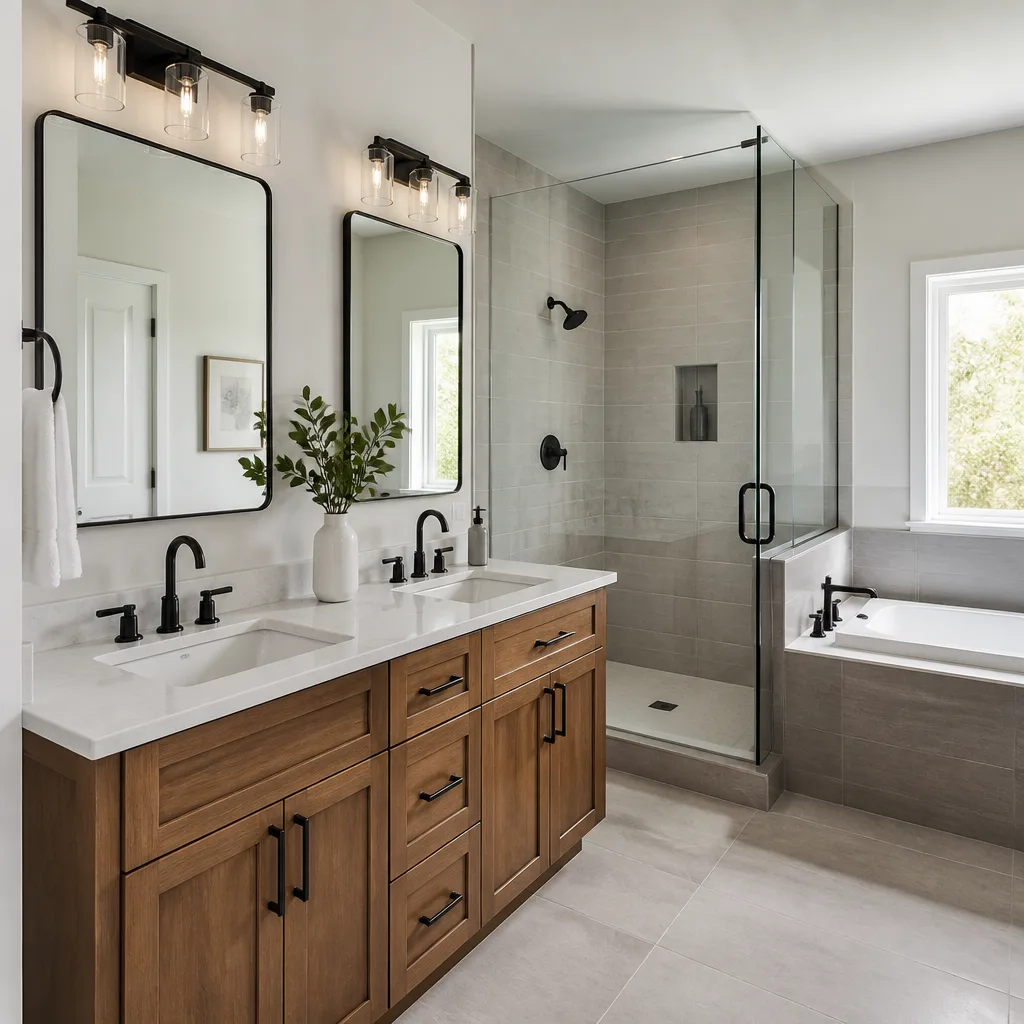
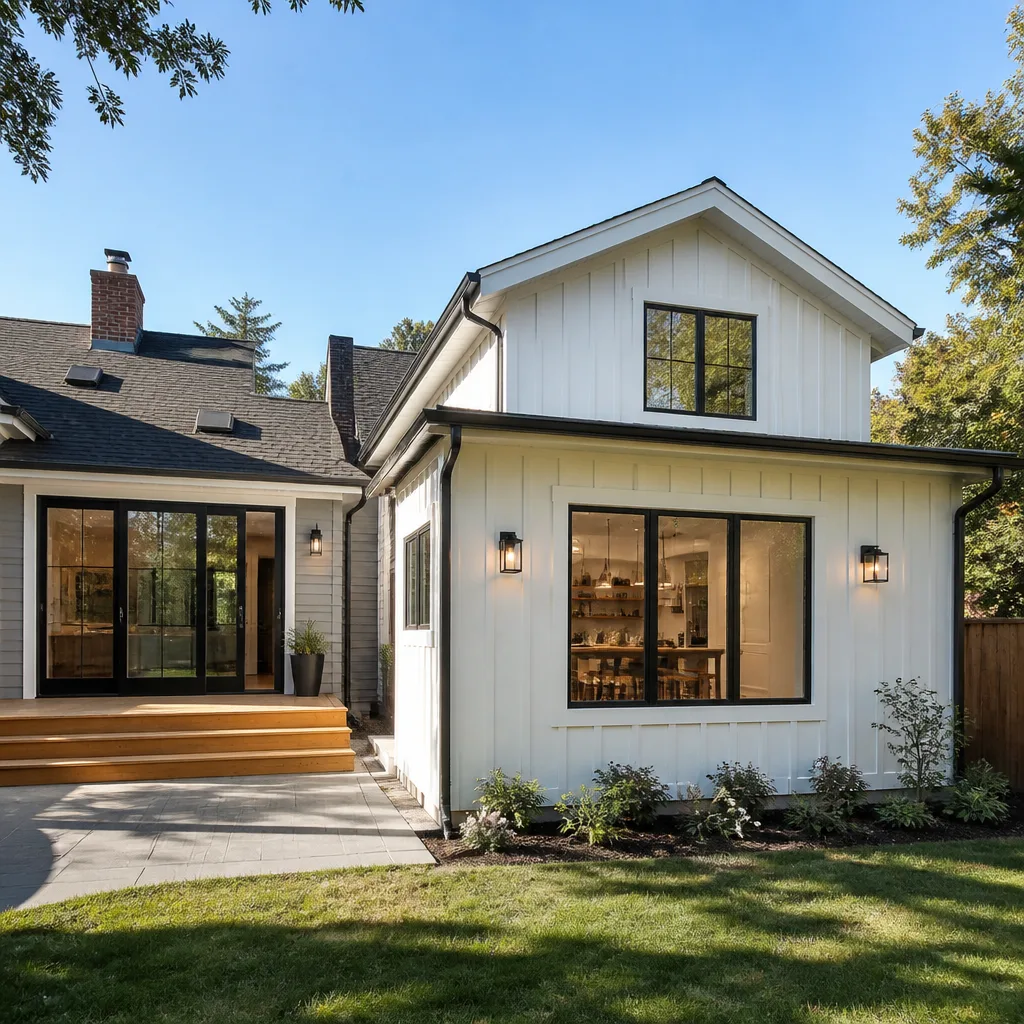
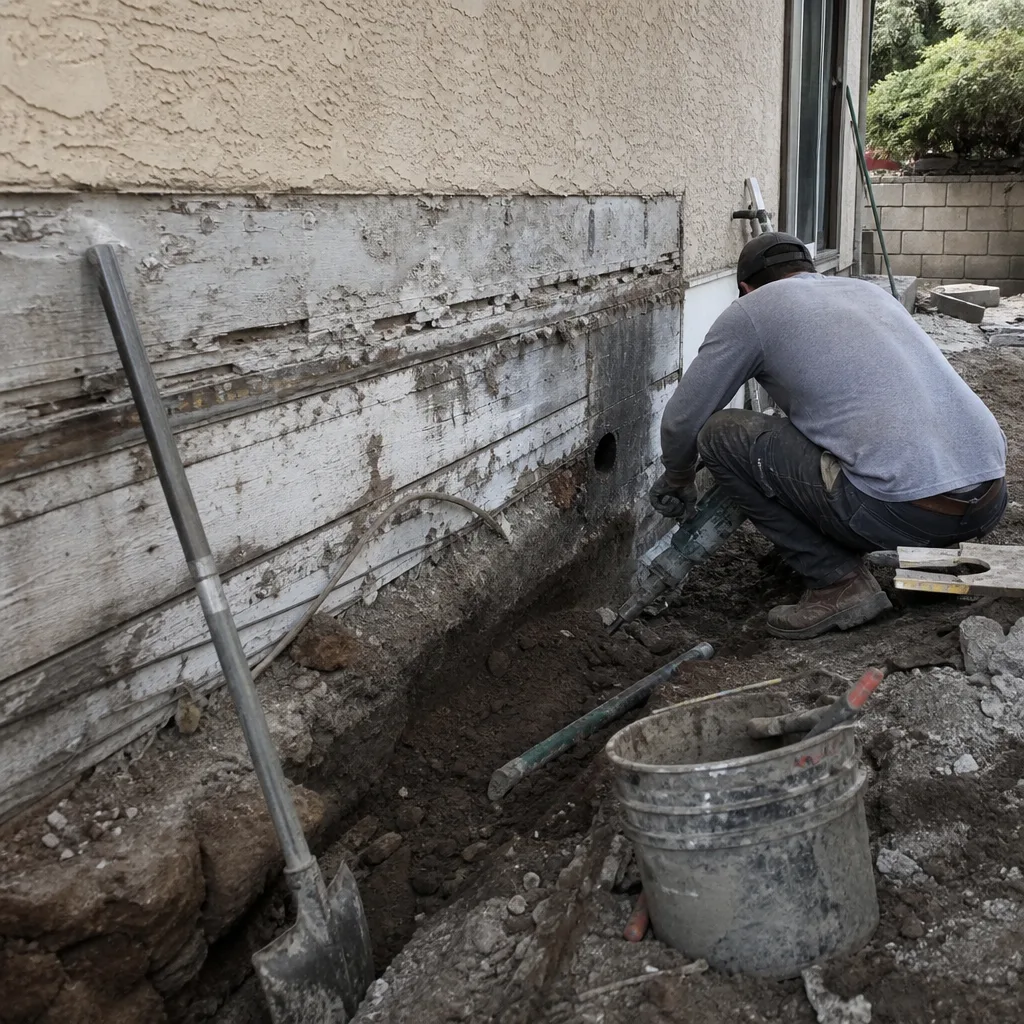 Before
 After
After Before
 After
After Before
 After
AfterHow Much Does Glass Railing Installation Cost in San Diego?
Glass railing installation in San Diego typically costs $180 to $400 per linear foot installed, putting a standard 40-foot deck or stair run somewhere between $7,200 and $16,000 depending on the glass system, post style, and site conditions. Most San Diego homeowners land in the $9,000 to $13,500 range for a single-level residential installation using tempered or laminated glass panels with either a frameless post system or a continuous aluminum channel (also called a U-channel base shoe). For a free written estimate on your specific project, call Rowan Construction Group at (858) 434-8926 – a flat price with a written scope before any work begins.
Glass Railing Installation Cost Breakdown (2026)
The table below reflects what Rowan Construction Group sees across San Diego projects in 2026 – from compact coastal balconies in La Jolla and Pacific Beach to hillside deck railings in Rancho Bernardo and Mission Hills. These are installed costs, meaning labor, materials, and standard hardware are included. Permit fees, custom fabrication, and structural post reinforcement are line items that add cost and are covered further below.
| System Type | Cost Per Linear Foot (Installed) | Typical Total (40 LF Project) |
|---|---|---|
| Semi-frameless with aluminum posts | $140 – $220 | $5,600 – $8,800 |
| Frameless with stainless steel posts | $200 – $320 | $8,000 – $12,800 |
| Frameless with U-channel base shoe (no posts) | $250 – $380 | $10,000 – $15,200 |
| Cable railing with glass infill panels | $180 – $300 | $7,200 – $12,000 |
| Custom curved or radius glass panels | $350 – $550+ | $14,000 – $22,000+ |
Additional Line Items That Affect Your Total
- San Diego building permit: $350 – $950 for most residential railing permits; the City of San Diego’s Development Services Department requires a permit for any railing replacement or new installation on a deck that is 30 inches or more above grade. Coastal Zone projects (anything seaward of the CEQA overlay boundary in Pacific Beach, La Jolla, or Ocean Beach) may require a Coastal Development Permit, which adds $600 – $1,800 in processing time and fees.
- Structural substrate inspection and repair: $400 – $1,800. Many San Diego decks built before 2000 have ledger board or post-base corrosion from the marine layer. Rowan’s crews document the condition of every substrate with a photo record before any railing work starts – if rot or corrosion is found, we give you the repair number in writing before it becomes a surprise on the final invoice.
- Glass panel type upgrade (laminated vs. tempered): $8 – $18 per square foot upcharge. Laminated glass – two layers bonded with a PVB interlayer – stays intact when broken rather than shattering. California Building Code Section 2407 requires tempered or laminated glass in all guardrail applications; laminated is increasingly preferred by coastal homeowners because salt air doesn’t compromise the edge seal the way it can with some tempered units over time.
- Handrail material: $45 – $140 per linear foot. Brushed stainless steel top rail is the most common choice in San Diego because it resists the chloride-rich marine environment. Powder-coated aluminum runs less; wood cap rails run more in maintenance over time.
- Stair railing sections: 15 – 25% cost premium per linear foot over flat deck sections, due to the angled cuts, custom rake hardware, and the extra labor involved in keeping each panel plumb on an incline.
- Gate integration: $850 – $2,200 per gate opening, including frame, hinge hardware, and self-closing latch.
What the Price Includes When Rowan Does the Work
Under Clause 1 of the Haven Standard, the written quote you receive before work starts is a flat price with a written scope – not an estimate that expands after the crew arrives. That quote covers labor, standard hardware, glass panels to spec, and post-installation cleanup. It also includes the documented photo record Rowan delivers on every visit: what the substrate looked like before installation, what was installed, and how the finished system aligns with the agreed scope. You leave with evidence, not just a finished railing.
The 365-Day Done Right Promise backs every installation. If anything about the glass, hardware, or post alignment isn’t right within the first year, Rowan makes it right – that’s in writing on the project paperwork, not in a handshake.
What Affects Glass Railing Installation Pricing in San Diego
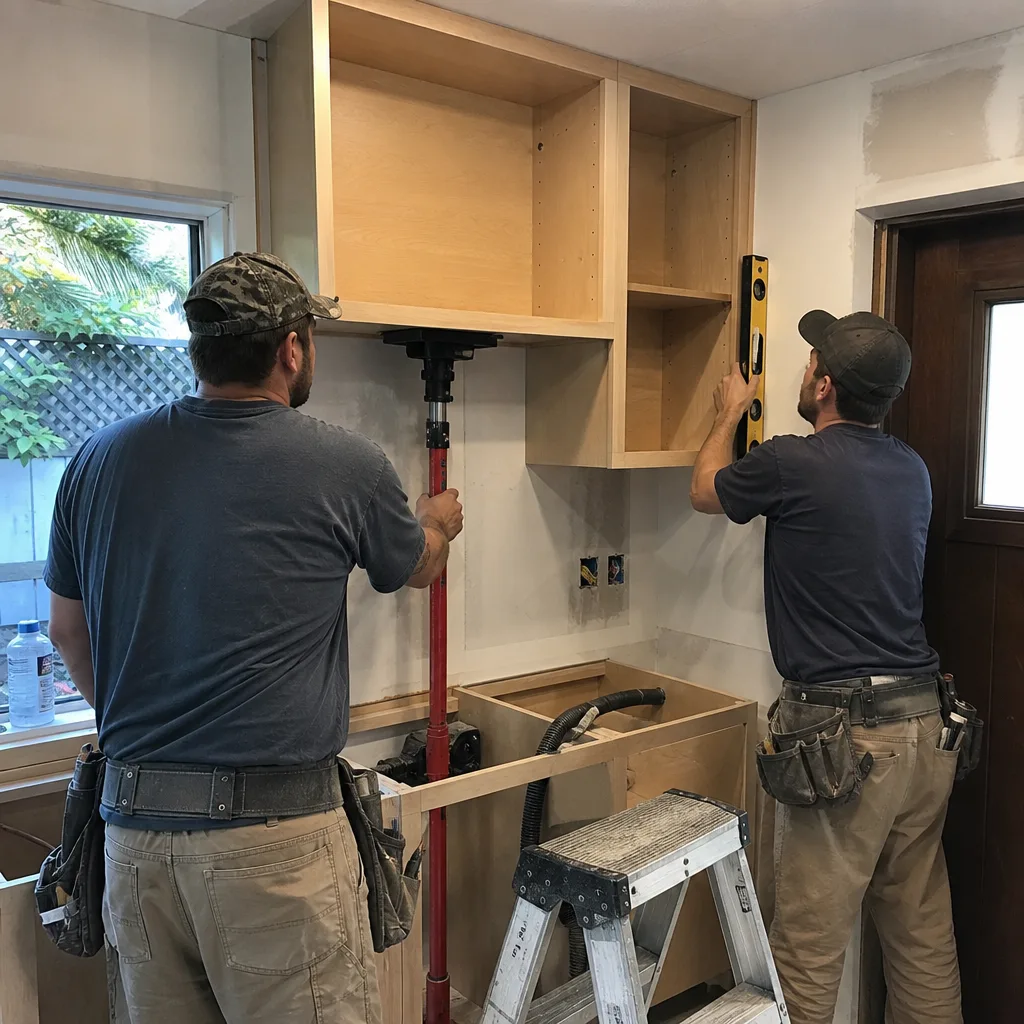
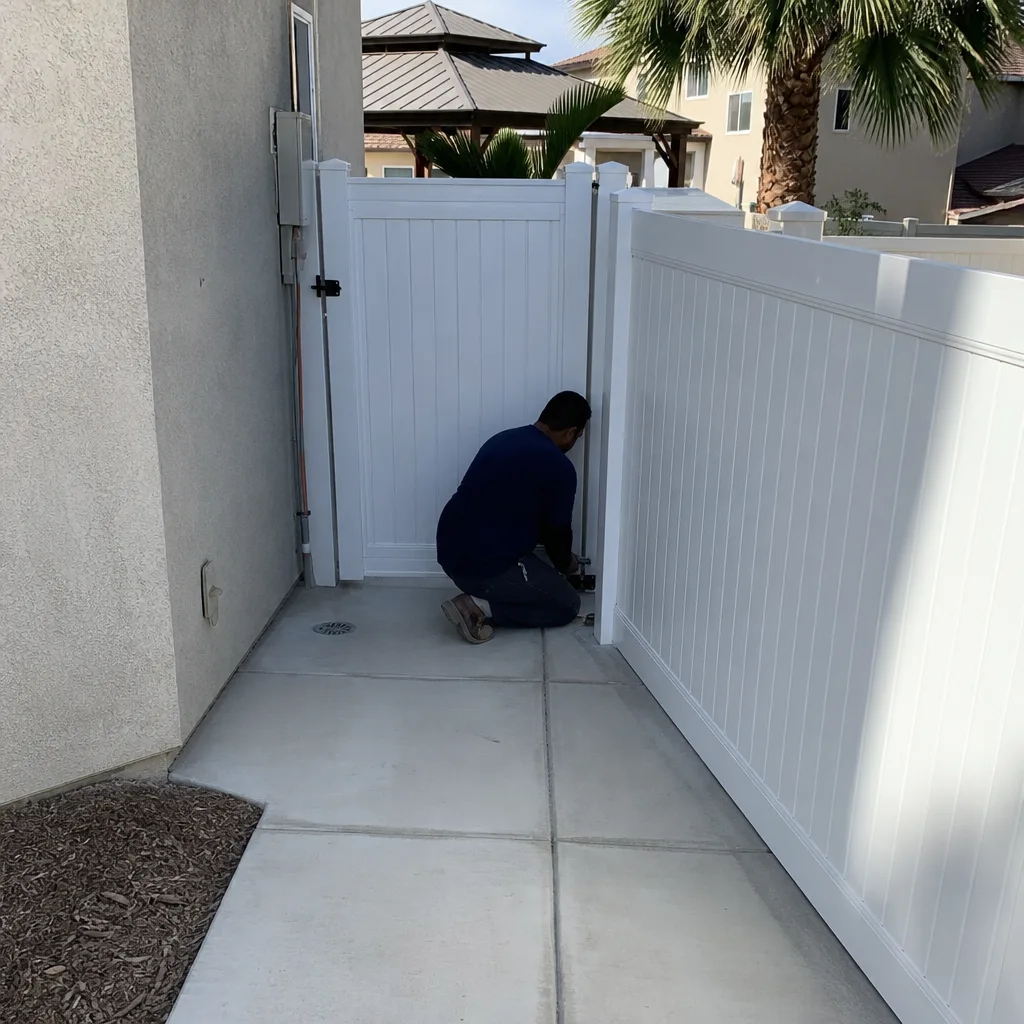
Glass railing pricing varies more than most homeowners expect – not because contractors are vague, but because the variables are real and specific to your site. Here is what moves the number up or down in the San Diego market.
- Proximity to the coast: In neighborhoods like Ocean Beach, La Jolla Shores, and Del Mar Heights, the marine layer deposits salt chloride on every exposed surface. That means specifying 316-grade stainless steel hardware (rather than the 304 grade common in inland projects), marine-rated sealants at the base shoe, and glass with a quality edge polish to resist moisture infiltration. Those material upgrades run roughly $20 – $45 more per linear foot than the same system installed in Poway or El Cajon. Skipping them to save money is how railings corrode within three years.
- Linear footage and layout complexity: A straight 50-foot deck run is straightforward to price and fast to install. A railing that wraps a corner, follows a curved deck edge, or transitions from deck to stair costs more per foot because each transition requires custom cuts, additional brackets, and more installation time. In our experience in Encinitas and Chula Vista, corner and stair transitions can add 18 – 30% to the per-foot cost of the sections involved.
- Glass thickness and system type: Most residential glass railings use 3/8-inch (10mm) tempered glass in a semi-frameless system. Frameless U-channel systems typically require 1/2-inch (12mm) glass because the base shoe carries the structural load instead of a post. Half-inch glass costs more to fabricate and weighs significantly more, which also affects labor time and crane or lift requirements on upper-floor projects.
- Deck height and access: Single-story deck railings in Tierrasanta or Scripps Ranch are straightforward work. Multi-story railings on hillside homes in Mount Helix or the canyon-edge properties in Santee may require scaffolding or a man-lift to work safely at height – add $600 – $1,500 for lift rental on those jobs. San Diego’s topography makes this more common here than in flat-grid markets.
- Existing railing removal: If you’re replacing a wood or wrought-iron railing, removal and disposal typically adds $8 – $18 per linear foot, depending on how the old system was anchored. Post sleeves core-drilled into concrete add more time than surface-mounted wood posts. Rowan accounts for this in the written scope so it doesn’t appear as a line-item surprise after demo begins.
- Permit complexity and Coastal Zone status: As noted above, projects within the City of San Diego’s Coastal Development Permit zone require additional review. Even a like-for-like replacement can trigger CDP review if the structure is within 300 feet of mean high tide. If you’re not sure whether your property falls in the zone, the San Diego City Planning Division’s GIS map confirms it. Rowan pulls the permit on every project where one is required – it’s part of the written scope, not an afterthought.
 Before
 After
AfterHow to Save on Glass Railing Installation in San Diego
There are legitimate ways to keep costs reasonable without cutting into the quality of the system. Here’s what actually works in this market.
Choose semi-frameless over fully frameless when the view allows it
The visual difference between a semi-frameless aluminum post system and a fully frameless U-channel system is subtle from more than 15 feet away, but the cost difference is $60 – $120 per linear foot. If you’re not sitting directly at rail level and the view matters more than the hardware disappearing completely, the semi-frameless system achieves roughly 85% of the aesthetic at 70% of the price. In projects we’ve done in Rancho Penasquitos and Mira Mesa, homeowners have chosen this route and been satisfied with the result for years.
Batch the permit with other planned work
If you’re also planning a deck surface replacement, a pergola, or an outdoor kitchen, pulling one permit that covers the full scope is typically cheaper than three separate permit applications. Coordinate the glass railing into the broader project scope and the permitting fee is shared across the work. This is a standard practice Rowan applies when quoting combined outdoor projects.
Get the substrate condition assessed before you price the glass
One of the fastest ways to see a glass railing budget blow past the estimate is discovering rotted ledger boards or corroded post bases after demo begins. A pre-installation substrate review – either a standalone inspection or done as part of the project estimate – surfaces those costs before they’re urgent. Rowan’s crews photograph the existing substrate condition during the estimate visit and include the repair scope in the written quote if work is needed. That’s what keeps projects within a few percent of the agreed number.
Ask for the written quote before committing to anything
San Diego has no shortage of railing contractors who quote by the running foot over the phone and then adjust the number on-site when they “see what we’re dealing with.” That’s not how Rowan operates. Under the Haven Standard, you get a written price before any work starts, every time. If a competitor has given you a written estimate, bring it in – Rowan offers a free second opinion on any written estimate, reviewed line by line at no charge. Call (858) 434-8926 to set that up, or to get your own written quote started.
Time the project outside peak season if you have flexibility
San Diego’s outdoor construction season runs nearly year-round, but demand peaks from March through September when homeowners are preparing outdoor spaces. If your timeline is flexible, scheduling a glass railing installation in October through February can result in better crew availability and occasionally shorter lead times on glass fabrication from local suppliers. It won’t always move the price, but it usually moves the schedule in your favor.
Avoid custom glass shapes unless the design requires them
Standard rectangular panels cut to height are fabricated from stock sheets and priced accordingly. Notched panels (cut around a post that’s already set), curved panels, or radius shapes require custom tempering – and once glass is tempered, it cannot be cut or modified. Custom shapes run $80 – $200 more per panel and have longer lead times. If the design can work with straight panels and standard hardware, it’s the right choice for budget control.
FAQs – Glass Railing Installation Cost in San Diego
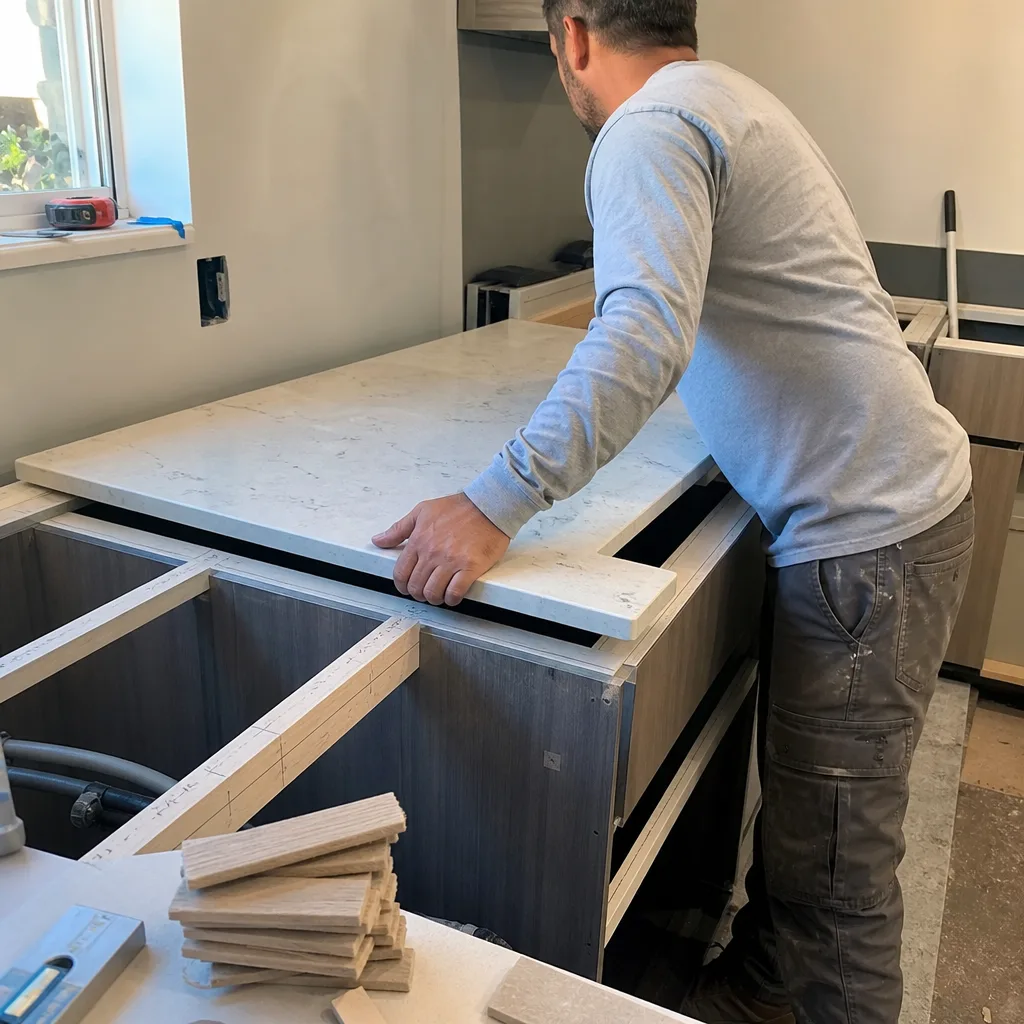
How much does glass railing installation cost in San Diego per linear foot?
Glass railing installation in San Diego costs $140 to $550 per linear foot installed, depending on the system type. Semi-frameless aluminum post systems start around $140 – $220 per foot. Frameless U-channel systems run $250 – $380 per foot. Custom curved or architectural glass can exceed $550 per foot. Most residential projects land between $180 and $320 per linear foot for a frameless or semi-frameless system with standard tempered glass panels and stainless steel hardware. Call (858) 434-8926 for a written quote based on your specific linear footage and system preference.
Do I need a permit for glass railing installation in San Diego?
Yes, in most cases. The City of San Diego requires a building permit for any railing installation or replacement on a deck, balcony, or stair that is 30 inches or more above grade. Permit fees typically run $350 to $950 for standard residential projects. If your property is within the Coastal Zone – which includes most of Pacific Beach, La Jolla, Ocean Beach, Del Mar, and portions of Encinitas – a Coastal Development Permit may also be required, adding $600 to $1,800 in fees and processing time. Rowan pulls the permit on every project where one is required; it’s written into the project scope before work starts, not billed as a surprise.
How long does glass railing installation take?
A standard 40-foot residential glass railing installation in San Diego typically takes one to three days once materials are on-site. The glass panels themselves take two to four weeks to fabricate after the field measurements are confirmed – tempered glass is cut and then heat-treated, and that process cannot be rushed. Coastal Zone permit processing, when required, adds the longest lead time: typically four to eight weeks depending on the project’s location and complexity. Rowan sequences the permit and fabrication in parallel where possible to reduce total project duration.
Is glass railing more expensive than aluminum or cable railing?
Glass railing systems generally cost 20 to 50% more than a standard aluminum picket fence railing and roughly comparable to or slightly above a stainless steel cable railing system. A cable railing in San Diego runs $120 – $220 per linear foot installed; an aluminum picket railing runs $90 – $160 per linear foot; a glass panel system runs $140 – $380 per linear foot depending on the system. The premium for glass is real, but so is the view preservation – which in hillside neighborhoods like La Jolla Farms, Torrey Hills, or Scripps Ranch, often represents meaningful property value. For a direct comparison on your project, Rowan will quote both options in writing so you can decide with numbers in front of you, not guesses. Call (858) 434-8926.
Can glass railings handle San Diego’s coastal weather?
Yes, when the right materials are specified. California Building Code Section 2407 requires tempered or laminated safety glass in all guardrail applications, and both hold up well to UV exposure. The hardware is the more important variable in San Diego’s coastal environment: 304-grade stainless steel post bases and fittings are adequate for inland neighborhoods like Scripps Ranch or Santee, but homes within a mile of the coast – Pacific Beach, Ocean Beach, Del Mar, La Jolla – should specify 316-grade stainless steel throughout, which has higher molybdenum content and resists chloride corrosion significantly better. Rowan specifies 316-grade as standard on all coastal projects and documents the hardware spec in the written scope so you know exactly what’s going into the ground and against your structure.
Does Rowan Construction Group handle the full glass railing project, including permits and fabrication coordination?
Yes. Rowan manages the full scope: field measurement, permit application, glass panel fabrication coordination, substrate prep, installation, and the documented photo record delivered at project close. The Glass Railing Installation in San Diego service page covers the full scope of what’s included. Every project runs under the Haven Standard – written price before work starts, no change order proceeds without your signature, and the 365-Day Done Right Promise in writing on the project paperwork. To see how Rowan’s approach fits into the broader range of residential construction trades, the home page covers the full picture. Call (858) 434-8926 to get a written quote for your specific project.
Written by Grant Rowan, Owner at Rowan Construction Group San Diego, serving San Diego since 2007. Pricing reflects the San Diego market as of 2026. Rowan Construction Group San Diego offers free written estimates – call (858) 434-8926.
What Our Customers Say
"Talked us out of the larger scope we came in asking for, because it would not have added the value we thought."
- Emil R."Fence and retaining wall along a sloped boundary. They photographed the footing depth at each post, which mattered when the county inspector came."
- Iona F."Solid work, decent crew, and the site was left tidy every evening."
- Pearl A.