
Free written scope consultation - allowances, timeline, and change-order rules on paper before a single trade is scheduled
 Before
 After
After Before
 After
After Before
 After
AfterQuikrete Roofing: The San Diego Owner’s Guide
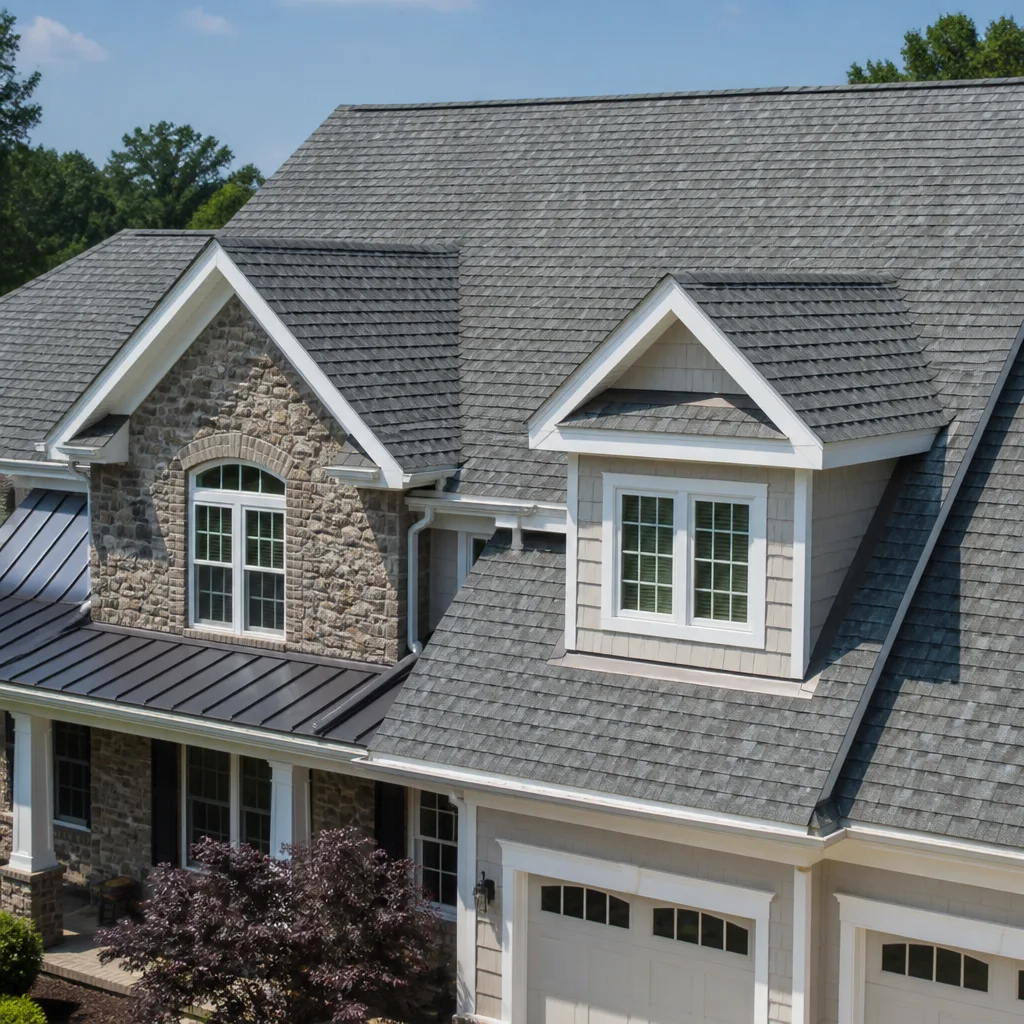
Quikrete’s roofing products, including their roof coating systems and patching compounds, are common on San Diego homes built between 1985 and 2010. We stock Quikrete-compatible elastomeric coatings, fibered roof cements, and patching compounds on every San Diego roofing truck, with installed repair pricing typically running $470-$2,125 depending on scope. Most Quikrete roof coating failures we see in San Diego start with hairline cracking after the third summer of UV exposure, or ponding water on flat sections where the original application was too thin.
Homeowners usually notice the problem first as a water stain on a ceiling, or granules washing into gutters from coated shingle roofs. In Clairemont and Mira Mesa, we regularly find Quikrete coatings that were rolled on at 10 mils instead of the specified 14-18 mils, which fails prematurely under our 260-plus days of annual sun.
Which Quikrete Models This Applies To
Quikrete does not use traditional model numbers for roofing; instead, look for the product code on the original bucket or invoice. The most common systems we service in San Diego are Quikrete Roof Coating No. 1150 (white elastomeric), Quikrete Fibered Roof Coating No. 1151, and Quikrete Heavy Duty Roof Coating No. 1152. The 1150 series is water-based and found on thousands of ranch-style homes in Scripps Ranch and Rancho Bernardo; the 1152 is solvent-based and used more often on commercial flat roofs in Kearny Mesa and Miramar.
Identification matters because these products are not interchangeable. The 1150 will re-emulsify if applied over the 1152 without proper prep. We check this with a simple solvent wipe test on site. For OEM-spec repairs, we source directly from Quikrete’s San Diego distribution; for budget-conscious owners, we also carry GAF and Owens Corning compatible coatings that meet the same ASTM D6083 elastomeric spec at a lower per-gallon cost. The catch: mixing manufacturers on the same roof section voids any remaining warranty and often creates visible color banding within two seasons.
Signs Your Quikrete Roofing Is Failing
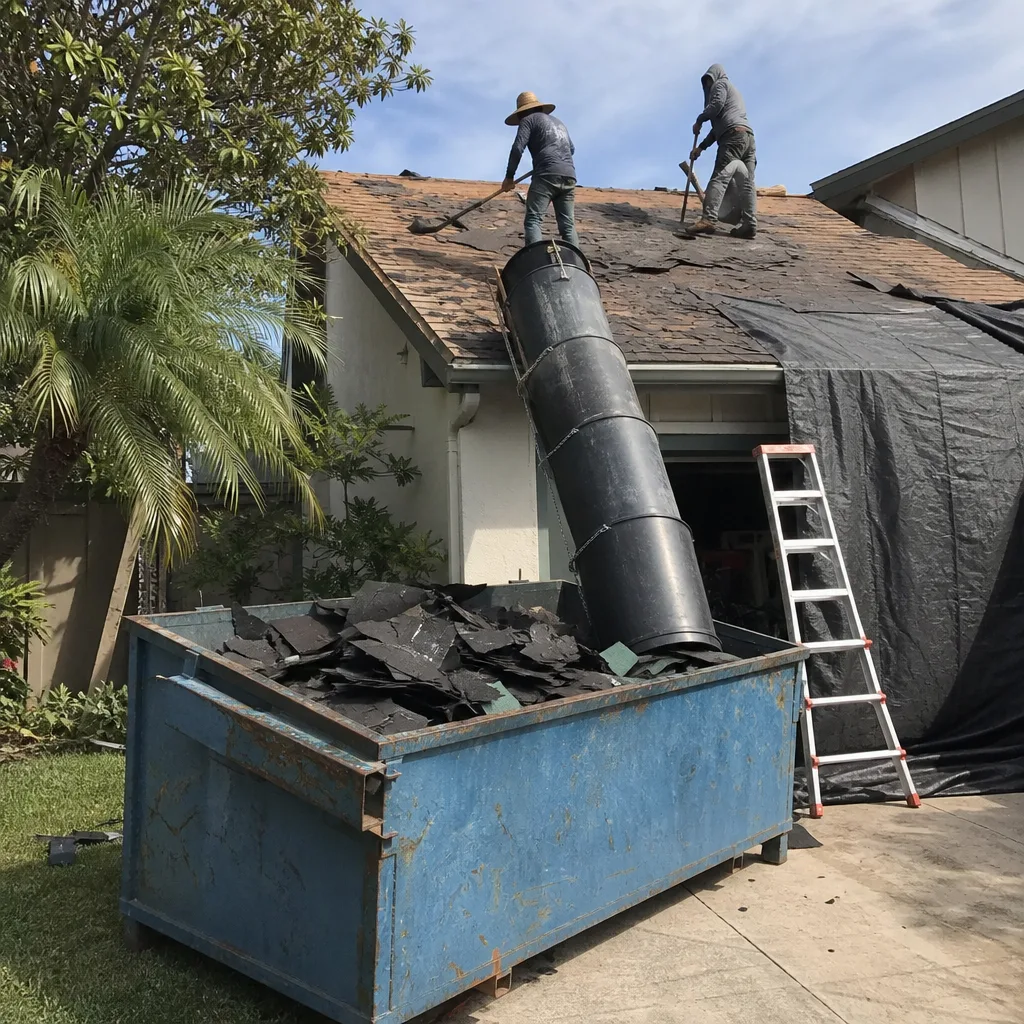
- Alligatoring or map cracking across the coating surface. This happens when the elastomeric film loses plasticizer content after repeated thermal cycling. San Diego’s inland valleys see 40-degree daily swings in August, which accelerates this failure mode compared to coastal properties.
- Soft or tacky spots that remain days after rain. Indicates the coating never fully cured, usually from application over damp substrate or outside the 50-90°F window. We see this frequently on north-facing slopes in La Jolla where morning fog lingers.
- Flaking or peeling at roof penetrations. The Quikrete coating separated from pipe boots or vent flashings because the substrate wasn’t primed with their No. 1154 acrylic bonding agent. This is a prep error, not a product defect, but the repair scope is the same.
- Ponding water that persists more than 48 hours after rain. On flat or low-slope Quikrete-coated roofs, this means the coating has lost its fill capability or the original taper was insufficient. Standing water above the coating accelerates UV breakdown by 3-4x.
- Interior stains that appear after wind-driven rain. The coating itself may look intact, but micro-cracks at seams or laps in the underlying modified bitumen are wicking water. Quikrete coatings are breathable, not waterproof barriers; they rely on a sound substrate.
 Before
 After
AfterReplacement Cost & What’s Included
Quikrete roof repair in San Diego falls within our standard roof repair range of $470-$2,125. A typical recoating of a 1,200 sq ft single-story home with Quikrete No. 1150 runs $1,180-$1,770 including pressure washing, primer, two coats at 14 mils wet film thickness each, and new flashing sealant at penetrations. Spot repairs, common in Pacific Beach and Ocean Beach where only a section has failed, start around $470 for a 100 sq ft area with proper feathered edges.
What drives the range: roof pitch (steeper = more labor), existing coating condition (full removal adds 30-40%), and access complexity. Our written quote specifies the product by name, the mil thickness, and the square footage. Under Clause 1 of the Haven Standard, that number is fixed; if we find unexpected substrate damage, we document it with photos, write a change order, and nothing proceeds until it’s signed. Every Quikrete coating job carries our 365-Day Done Right Promise and a documented photo record of surface prep, mil-gauge readings, and finished coverage.
DIY or Call Us?
An owner can safely inspect their Quikrete roof from the ground with binoculars, or from a ladder at the eaves if the roof is walkable and dry. Look for the cracking patterns and soft spots described above. Check gutters for white coating granules, which signal film breakdown.
We do not recommend DIY application. Elastomeric roof work requires fall protection on slopes above 4:12, proper mil-gauge verification that most homeowners don’t own, and the pressure washing prep that sends debris into landscaping and needs containment. More critically, coating over wet substrate or active leaks traps moisture and accelerates deck rot. Our crews carry moisture meters and infrared cameras to verify dryness before application. If you’re weighing the cost, call (858) 434-8926 and we’ll review your situation. Our Free Second Opinion applies to any written estimate you’ve already received, including your own material list.
FAQs
A properly applied Quikrete elastomeric coating lasts 7-10 years in San Diego’s coastal zones, 5-7 years inland where UV intensity and thermal cycling are more severe. The 1152 heavy-duty solvent-based product extends this by 2-3 years but costs roughly 40% more per gallon. Call (858) 434-8926 for an exact quote on your specific roof - estimates are free.
Localized failures can be spot-repaired if the surrounding coating is still well-adhered, which we verify with a pull test. Widespread alligatoring or multiple soft zones means the film has degraded throughout and spot repairs will telegraph through within a season. We document the test results with photos so you can see what we found. Call (858) 434-8926 for an assessment.
Most residential recoatings are two-day jobs: day one for pressure washing and primer, day two for the finish coats after the primer has cured. Weather holds are common in May and June when marine layer moisture prevents proper curing; we check dew point and substrate temperature before starting. Call (858) 434-8926 to schedule around the forecast.
We stock Quikrete No. 1150, 1151, and 1152 on our San Diego trucks, along with the 1154 bonding primer and compatible flashing sealants. We also stock GAF and Owens Corning equivalents for comparison. You do not need to source materials; our written quote includes product, labor, and warranty as a single flat price. Call (858) 434-8926 to schedule your free estimate.
Written by Grant Rowan, Owner, Rowan Construction Group San Diego at Rowan Construction Group San Diego, serving San Diego and nearby areas.