
Free written scope consultation - allowances, timeline, and change-order rules on paper before a single trade is scheduled
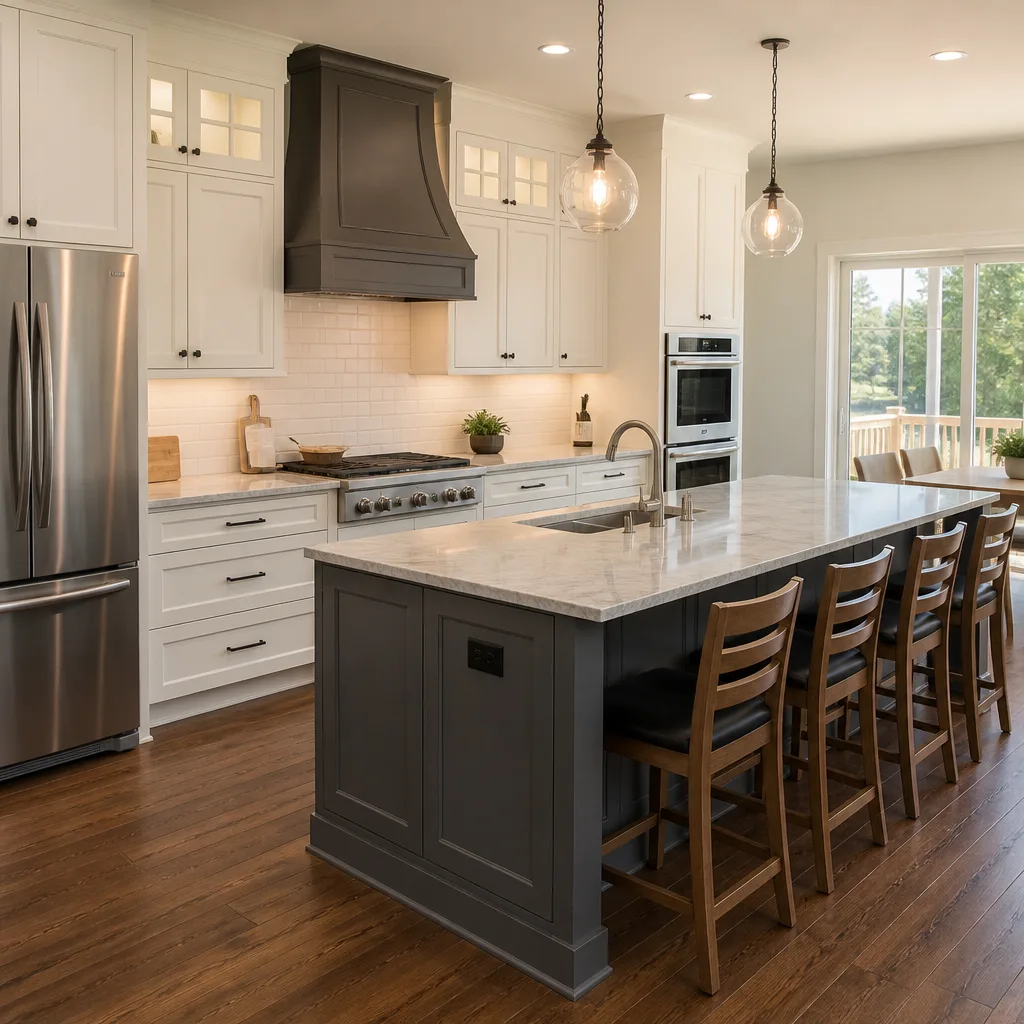
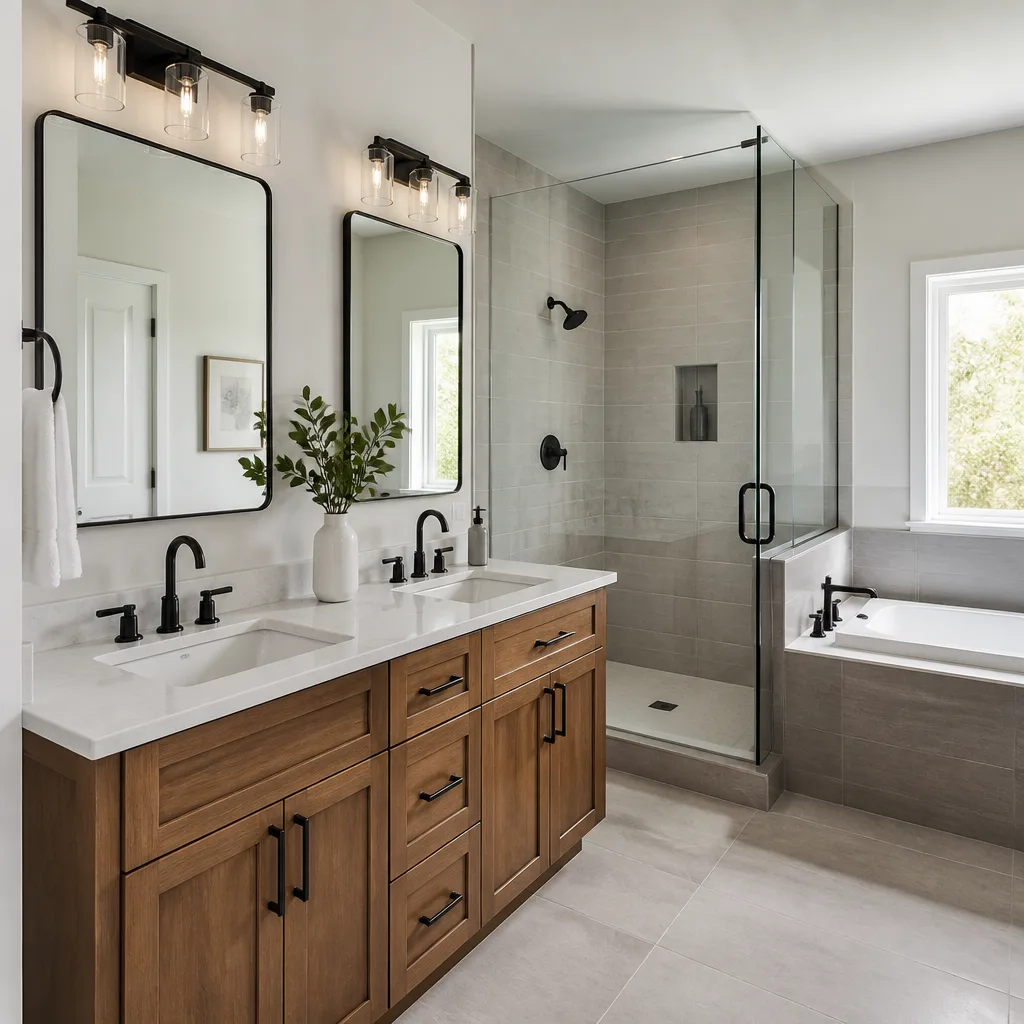
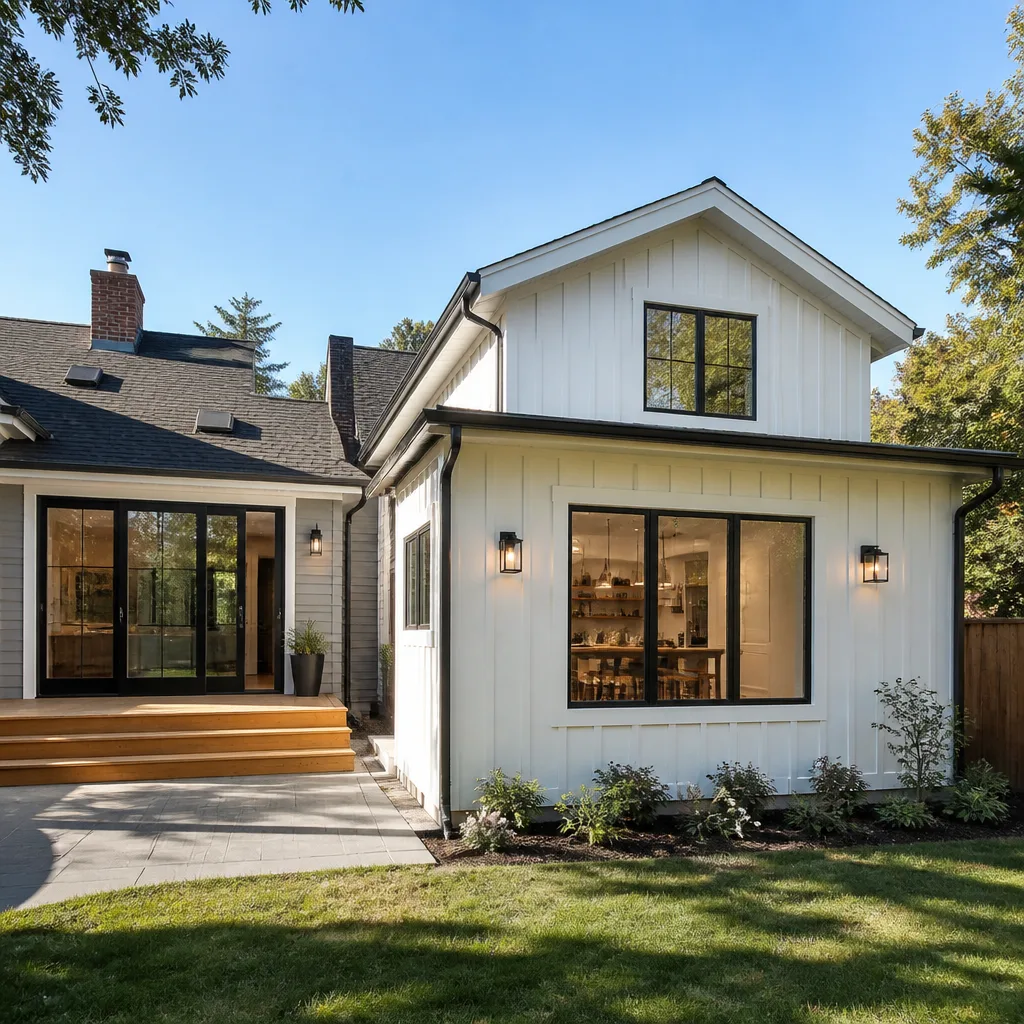

 Before
 After
After Before
 After
After Before
 After
AfterQuartz & Granite Countertops in San Diego, CA
Quartz and granite countertop installation in San Diego typically runs between $65 and $175 per square foot installed, depending on material, edge profile, and the condition of your existing substrate. Most kitchens in the area land between $3,200 and $8,500 for a full countertop replacement, and Rowan Construction Group puts that number in writing before anyone sets foot in your kitchen with a template rod.
If you’ve been researching this as part of a broader kitchen update, start with our Kitchen Remodeling in San Diego page for the full scope of what we do – countertops are one piece of that work, and they’re often the piece that drives the rest of the decisions. This page covers the countertop trade specifically: material differences, what the install actually involves, what it costs in San Diego’s market, and what Rowan does differently from the cabinet shop that offers slabs as an add-on.
Grant Rowan founded this company in 2007 with a single operating rule: a written price exists before any work starts, every time, no exceptions. That rule, now codified as Clause 1 of the Haven Standard, is why we’ve delivered 4,000-plus projects without a single “the price changed” surprise that wasn’t authorized by a signed change order. Call us at (858) 434-8926 if you’d rather talk through your kitchen remodeling before reading further – a live person picks up around the clock.
When You Need Quartz & Granite Countertops
Not every countertop situation is the same. Here’s what typically brings San Diego homeowners to this decision:
- Existing laminate that’s lifted or bubbled near the sink. In coastal zip codes like Ocean Beach, Point Loma, and Mission Hills, humidity cycling through single-pane windows and older ventilation causes laminate substrate to delaminate faster than it does inland. Once the core is compromised, cleaning the surface doesn’t fix it – the slab needs to come out.
- A pre-sale kitchen refresh in a neighborhood where buyers expect stone. In Del Mar, Carmel Valley, and Rancho Bernardo, listings with laminate counters sit longer or sell with price concessions. Quartz specifically photographs well in MLS listings – it doesn’t glare the way polished granite can.
- Cracked tile grout lines that hold bacteria and can’t be reliably re-grouted. Tile countertops were common in San Diego homes built before 1995. When the grout cracking becomes systemic rather than isolated, replacement with a continuous slab surface is cleaner long-term than repeated re-grouting.
- A kitchen remodel where cabinet heights are changing. New cabinetry often shifts counter height by fractions of an inch relative to the wall, which means existing slab edges either overhang incorrectly or leave gaps. Templating happens after cabinet installation, not before – the sequence matters.
- Granite that’s lost its seal and is staining near the cooktop. Unsealed granite near a gas range absorbs grease over time. In kitchens that were sealed once at install and never again, that absorption can be significant. Depending on the depth, re-sealing helps marginally; in serious cases, a new slab is the cleaner answer.
- An ADU or accessory dwelling unit kitchen that needs a finished surface on a budget. San Diego’s ADU market has been active since the 2020 state law changes. Quartz remnants from larger residential projects can cut installed cost significantly for a smaller ADU galley kitchen – sometimes under $1,800 total.
Our Quartz & Granite Countertops Process
-
Written Scope and Flat Price Before Anything Is Scheduled
Under Clause 1 of the Haven Standard, the quote is a flat price with a written scope – material, edge profile, cutouts for sink and cooktop, backsplash removal if needed, and haul-away of the old surface. There’s no “call for a quote” here. You get a number you can screenshot, compare, and sign before we schedule anything. If you have a written estimate from another contractor, bring it. Grant Rowan offers a free second opinion on any written estimate, reviewed line by line, at no charge.
-
Material Selection from Vetted Suppliers
We work with Cambria and Caesarstone for quartz, and source granite through regional stone yards where Grant or a lead project manager physically inspects slab lots before committing them to a job. That matters because granite is a natural material – the slab in the showroom photo is not necessarily the slab that ends up in your kitchen unless someone checked the lot. We name the brand and the specific collection in your written quote, not a generic line item that says “granite, TBD.”
-
Precision Template of Your Kitchen
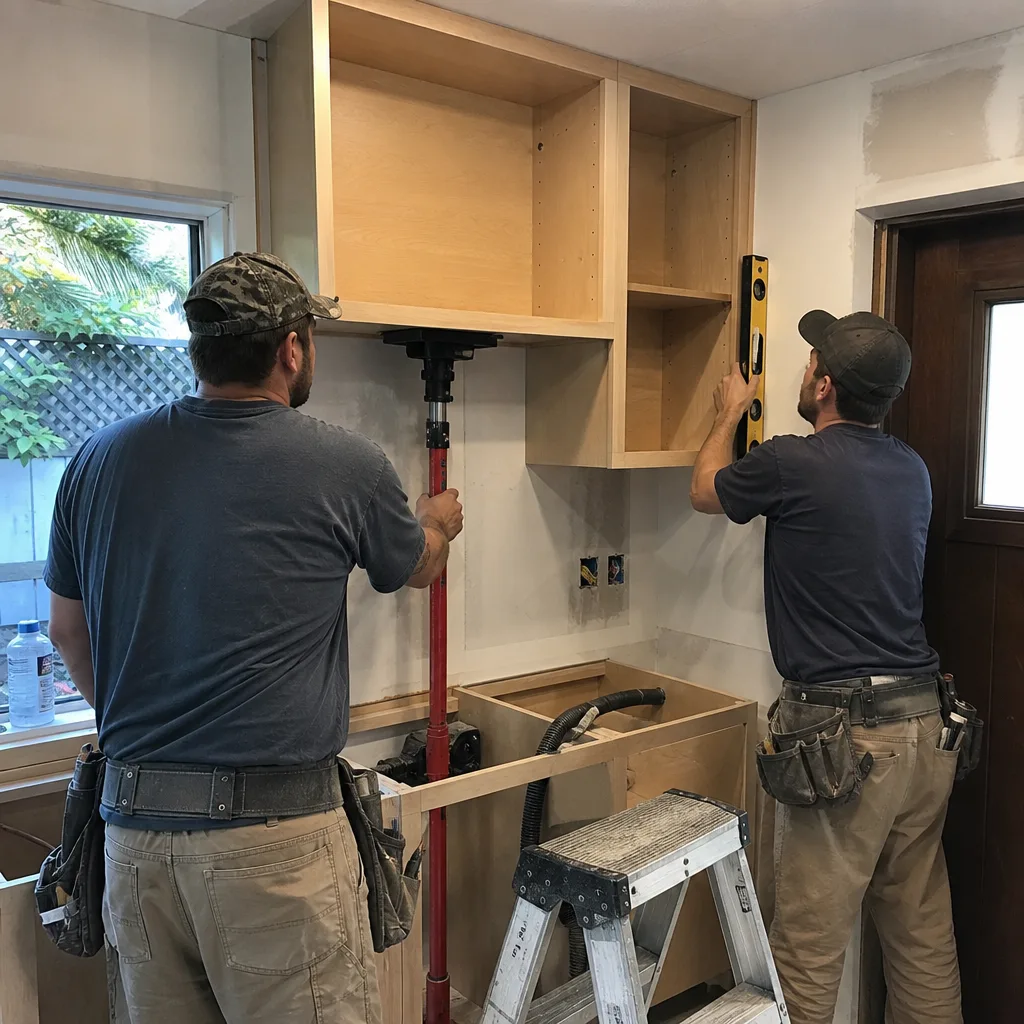
Templating happens after cabinets are set and level, not before. We measure every corner, notch, and appliance cutout with physical templates – the same discipline fabricators use when a layout has more than two inside corners or an irregular peninsula. San Diego kitchens, especially in older Craftsman-style homes in North Park and South Park, often have non-square corners and radiused soffits that require field verification rather than plan dimensions.
-
Fabrication and Edge Finishing
The template goes to the fabrication shop with a specific edge profile written into the order – eased, beveled, ogee, or mitered waterfall if you’re doing a waterfall island edge. Edge profile affects both cost and install time; a full bullnose on a long run takes more passes than a simple eased edge and the quote reflects that difference specifically. No surprises on that line item.
-
Installation, Substrate Inspection, and Documentation
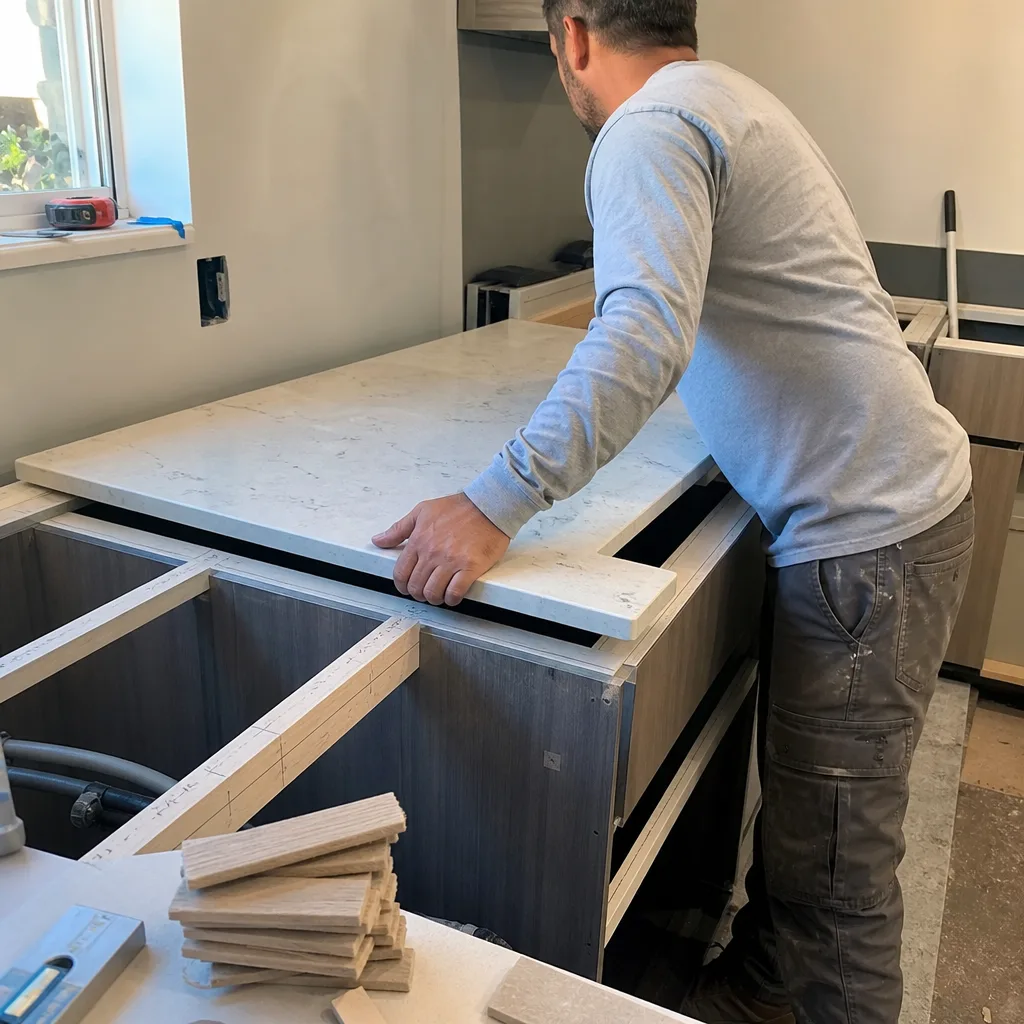
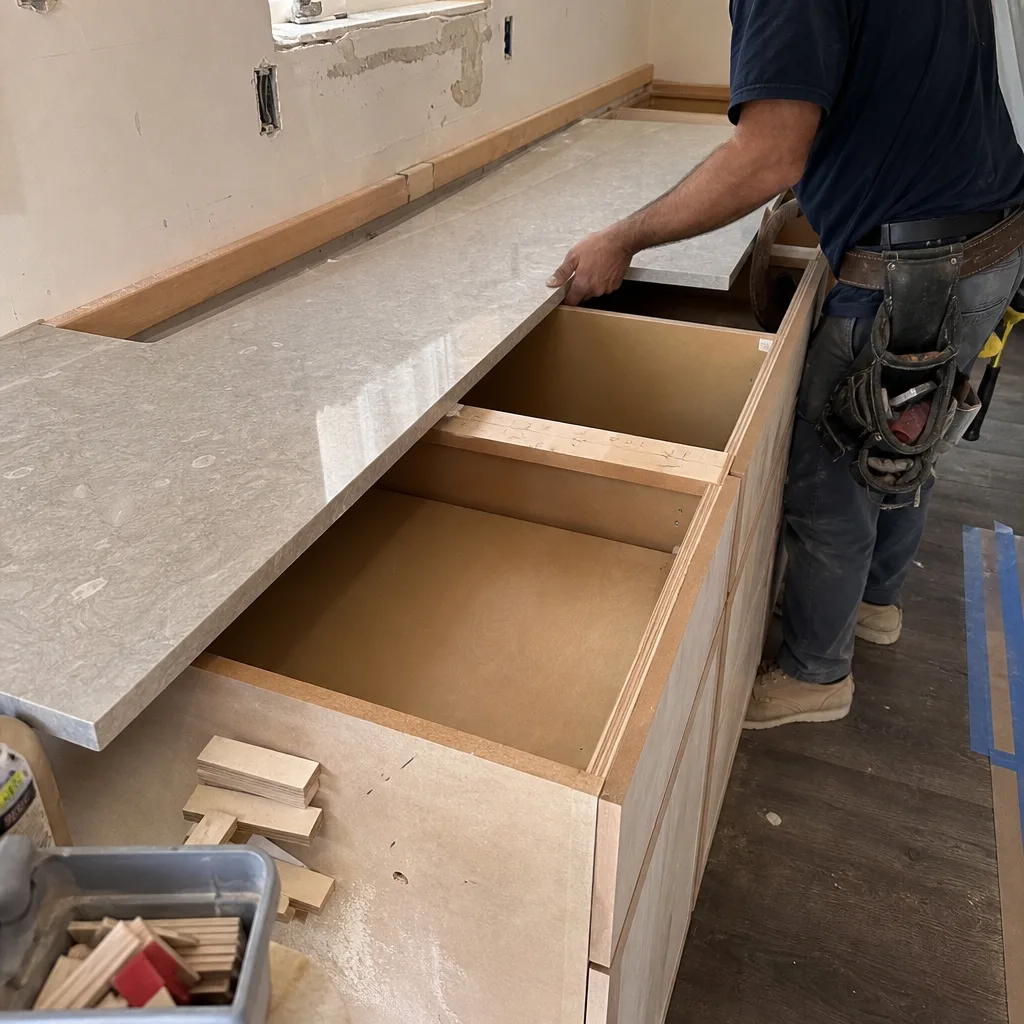
When the crew arrives, the first step is substrate inspection – the cabinet top framing that the slab will sit on. If the substrate is out of level by more than an eighth of an inch across a run, shims go in before the slab does. Every visit includes a documented photo record: substrate condition before installation, slab placement, sink cutout fit, and final seam location if applicable. That photo record is included in what you receive at project close – it’s a standard deliverable, not something you have to ask for.
-
Sealing, Cleanup, and 365-Day Done Right Promise
Granite is sealed at installation with a penetrating sealer; quartz is non-porous and doesn’t require it, though the joints are caulked at the wall and sink. Cleanup is same-day. The 365-Day Done Right Promise covers workmanship from day one: if a seam opens, if a cutout edge chips under normal use, if anything isn’t right – Rowan makes it right. That promise is printed on the project close-out paperwork and backed by terms, not an asterisk at the bottom of an email.
 Before
 After
AfterQuartz & Granite Countertops Pricing in San Diego
San Diego’s countertop market runs slightly higher than the national average, primarily because of material transport costs to Southern California and the labor rates in a market where skilled stone installers are in consistent demand. Below are honest ranges based on what Rowan jobs have actually cost in San Diego – not national averages pulled from a pricing database.
| Material / Scope | Typical Installed Cost Range |
|---|---|
| Entry-level quartz (Caesarstone Classic or similar) – standard kitchen | $3,200 – $4,800 |
| Mid-range quartz with waterfall island edge | $5,500 – $7,200 |
| Cambria natural stone collection (premium quartz) | $6,000 – $9,500 |
| Granite, standard lot selection, eased edge | $3,800 – $5,500 |
| Granite, premium slab with book-match seam | $6,500 – $10,000+ |
| ADU or small galley kitchen (remnant quartz) | $1,600 – $2,800 |
| Old surface removal and haul-away (standalone) | $250 – $550 |
What Moves the Number Up or Down
- Square footage: Most San Diego kitchens run 35 to 55 square feet of countertop surface. Larger kitchens with full perimeter runs and an island climb faster than the per-square-foot rate suggests because seam placement and waste factors increase.
- Edge profile: An eased edge on a straight run is the baseline. An ogee or mitered waterfall profile on an island adds fabrication time and is priced as a separate line item in the written quote.
- Sink cutout type: Undermount sinks require a finished edge on the cutout; drop-in sinks don’t. If you’re switching sink type at the same time, that affects the cutout spec and cost.
- Substrate condition: If the cabinet framing is out of level or the upper cabinet support rail needs reinforcement to carry slab weight, that’s documented and quoted as a separate line before any work proceeds.
- Material lead time: Cambria and premium granite lots sometimes have two to three week lead times from San Diego-area distributors. That’s factored into the schedule in writing, not discovered on installation day.
The written estimate for your specific kitchen is free. Call (858) 434-8926 and a live person will schedule a time for Grant or a project lead to walk the kitchen, document substrate condition, and hand you a flat-price written quote – no range, no “starting at,” no call-back required.
Quartz vs. Granite: Which Is Right for Your San Diego Kitchen?
Both materials work in San Diego’s climate. The coastal humidity and UV exposure that affect exterior materials don’t meaningfully affect either quartz or granite indoors. The decision usually comes down to use pattern and maintenance preference, not durability.
Quartz – an engineered stone with a resin binder – is non-porous. It doesn’t need sealing and doesn’t absorb oil, wine, or acidic liquids. Caesarstone and Cambria both produce quartz with consistent color and movement because the pigment is controlled at manufacturing. If you want a surface that looks exactly like the showroom sample in ten years with zero maintenance beyond wiping, quartz is the cleaner answer.
Granite is a natural stone: every slab is different, the movement is real rather than engineered, and the look is genuinely one of a kind. That’s the draw. The trade-off is that granite is porous and needs resealing every one to three years depending on use. In a household with young children who cook regularly, that maintenance interval matters. In a lower-traffic kitchen or one where the aesthetic of natural stone is a priority, granite holds its own completely.
Grant Rowan’s standard advice: if you’re doing this once and want the lowest lifetime maintenance burden, go quartz. If the specific visual of a natural stone slab is what you’re after and you’re willing to seal it periodically, granite is worth the extra care.
FAQs – Quartz & Granite Countertops in San Diego
How long does countertop installation take in San Diego?
Most countertop replacements in San Diego take one to two days for installation once the slab is fabricated. The full timeline from signed quote to completed install is typically two to four weeks, with fabrication being the longest step. Premium granite lots and Cambria collections can run three weeks from order to delivery in the San Diego market. That timeline is written into the project schedule before work starts. Call (858) 434-8926 for a current lead-time estimate – fabrication schedules shift seasonally.
Is quartz or granite better for resale value in San Diego?
Both add measurable value relative to laminate or tile, and neither outperforms the other consistently in San Diego appraisals. What matters more to buyers in markets like Clairemont, Kensington, and La Mesa is that the surface is stone, continuous (no grout lines), and in good condition. Quartz photographs better in listing photos because it doesn’t produce the hot spots that polished granite can. If the sale is the primary driver, quartz is a slightly lower-maintenance choice at listing time – no re-sealing needed before showing.
Can you install countertops without replacing the cabinets?
Yes, and we do it regularly. The key requirement is that existing cabinets are structurally sound, level within an eighth of an inch across the run, and capable of supporting slab weight (roughly 18 to 25 pounds per square foot for granite; slightly less for quartz). The substrate inspection at the start of every Rowan job documents cabinet condition with photos before any slab is ordered. If a cabinet box needs reinforcement, that’s a separate line in the quote – not a day-of surprise.
What’s included in Rowan’s countertop quote?
The written flat-price quote covers: templating, slab material at the specified brand and collection, edge profile, all standard cutouts (sink, cooktop), old surface removal and haul-away, installation with substrate leveling shims as needed, sealing on granite, and caulking at wall and sink joints. What’s not included by default is backsplash, tile & flooring work – that’s a separate line item if you want it, and it’s quoted upfront rather than added afterward. The 365-Day Done Right Promise on workmanship is printed on every project close-out document.
Do you offer a second opinion on countertop estimates from other contractors?
Yes. Bring any written estimate you’ve received and Grant Rowan will review it line by line at no charge – material spec, fabrication cost, edge profile pricing, and installation scope. San Diego countertop bids vary significantly in what they include; a $3,500 quote that excludes haul-away, backsplash removal, and substrate leveling often ends up costing more than a $4,200 quote that covers all of it. The free second opinion is a standing offer, not a promotion with an expiration date. Call (858) 434-8926 to schedule one.
Why San Diego Homeowners Choose Rowan Construction Group
Rowan Construction Group has delivered over 4,000 projects in San Diego since 2007 – every one with a written price before work started and a documented photo record when the crew left. That’s not a marketing statement; it’s an operating system. The Haven Standard, which governs how every Rowan job runs, exists because Grant Rowan built the company around the idea that a contractor who can’t give you a number in writing before starting probably doesn’t know what the number is.
Our crews are background-checked and uniformed. A live person answers the phone at (858) 434-8926 at any hour. No work proceeds on a change until a change order is signed – that’s how 4,000 projects have finished within a few percent of the agreed cost. The 365-Day Done Right Promise is on paper, not a handshake. And if you arrive with a competitor’s written estimate, we’ll review it free.
If you’re planning a full kitchen update alongside countertops, the home page lists every trade we cover across San Diego. Countertops are often the catalyst – the decision to replace the surface leads to the conversation about cabinets, lighting, and layout. We can scope it in sequence or all at once, with a written price for each phase before any of them start.
Key Takeaways
- Quartz and granite countertop installation in San Diego typically costs $3,200 to $8,500 for a standard kitchen, depending on material and scope.
- Quartz (Caesarstone, Cambria) is non-porous and requires no sealing. Granite needs resealing every one to three years.
- Templating happens after cabinets are set – not before – to account for the non-square layouts common in older San Diego homes.
- Every Rowan quote is a flat written price with a written scope. No work proceeds on a change without a signed change order.
- The 365-Day Done Right Promise covers workmanship in writing from day one of project close.
- Free second opinion on any written estimate – call (858) 434-8926 to schedule.
Written by Grant Rowan, Owner at Rowan Construction Group San Diego, serving San Diego since 2007.