
Last updated September 25, 2026
Free written scope consultation - allowances, timeline, and change-order rules on paper before a single trade is scheduled







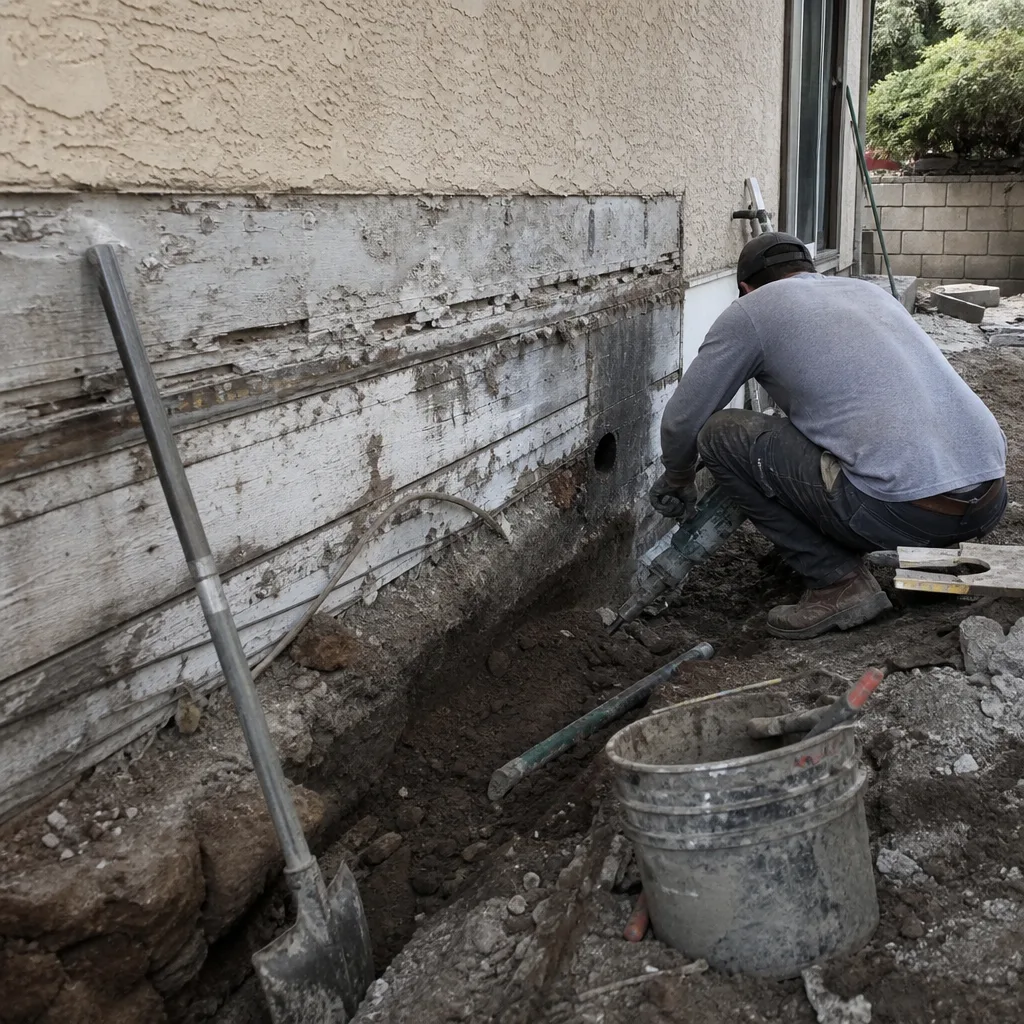 Before
 After
After Before
 After
After Before
 After
AfterKitchen Remodeling Maintenance Checklist for San Diego Homeowners
A kitchen remodel within three miles of the San Diego coast can show finish degradation within 18 months if the specified materials weren’t rated for marine exposure. Cabinet hinge corrosion, grout discoloration, and range hood motor wear don’t wait for seasons to change. Most maintenance checklists assume freeze-thaw cycles and heavy snowfall; San Diego’s salt air, marine layer humidity, and seismic micro-movements create an entirely different failure pattern that homeowners only discover after their renovation is already degraded. This guide maps those specific failure points, organized by what to inspect, when to inspect it, and what documentation you should have on file to protect your investment.
Quick Answer
San Diego kitchen remodel maintenance requires quarterly checks of coastal-exposed hardware for corrosion, annual inspection of cabinet boxes and drawer slides for marine-layer moisture intrusion, and verification that grout, caulk, and ventilation systems are performing to specification after wildfire smoke exposure. Homeowners should keep all warranty paperwork, signed change orders, and material specifications organized for review at the 1-year and 3-year marks. The total annual time investment is roughly 4-6 hours, concentrated in two inspection sessions.
Table of Contents
- Coastal Corrosion Inspection Points
- Marine Layer Humidity and Cabinet Construction
- Grout, Caulk, and Seismic Micro-Movements
- Ventilation Performance and Wildfire Smoke Season
- Appliance and Plumbing Systems
- Signed Documentation and Warranty Verification
- Your San Diego Maintenance Calendar
- Common Mistakes to Avoid
 Before
 After
AfterCoastal Corrosion Inspection Points
Stainless steel isn’t a single material. It’s a family of alloys, and the distinction between 304 and 316 grade determines whether your cabinet hinges, drawer slides, and range hood fasteners survive a decade or start weeping rust before your second anniversary in the kitchen.
Type 304 stainless contains 18% chromium and 8% nickel. It’s the standard specification for inland kitchen hardware and performs adequately where salt air exposure is minimal. Type 316 adds 2-3% molybdenum, which creates resistance to chloride attack - the precise mechanism that causes pitting corrosion in coastal environments. Within three miles of San Diego’s coastline, from La Jolla Shores down through Imperial Beach, 316 should be the minimum specification for any hardware that isn’t behind a sealed barrier.
Here’s how to spot early oxidation on wrong-spec’d fasteners before it becomes visible damage:
- Remove one hinge or slide screw annually. Use the original driver type (typically Torx T-15 or Phillips #2) to avoid cam-out damage. Examine the threads under magnification if possible - a 10x loupe costs roughly $8 and reveals pitting long before it’s visible to the naked eye.
- Check for tea staining. This light brown surface discoloration is the first visible stage of 304 corrosion in marine environments. It wipes off with a cloth but returns within weeks. Tea staining on visible hardware means the specification was inadequate for your location.
- Test drawer slide operation. Ball-bearing slides should move with consistent resistance from fully closed to fully extended. Grabbing, clicking, or uneven resistance often indicates bearing race corrosion that hasn’t yet produced visible rust.
- Inspect under-cabinet light mounting brackets. These are frequently specified at 304 even when primary hardware is 316, because they’re treated as accessory components. The bracket fails first, then the fixture sags or drops.
If your renovation was completed without material specifications documented, you can still test. A magnet will not stick to either 304 or 316 in their annealed state, so magnetic testing only identifies plain steel or ferritic grades, not the difference between austenitic types. For that, you need the mill certification or a laboratory spot test. We keep 316-grade replacement hardware in stock for kitchen remodeling in San Diego projects where the original contractor specified incorrectly.
Pay particular attention to range hood fasteners. The combination of grease vapor, salt air, and heat cycling accelerates corrosion beyond what either factor would produce alone. A hood fastener that looks sound from below may be severely compromised at the thread engagement point where the vapor condenses.
Marine Layer Humidity and Cabinet Construction
San Diego’s marine layer pushes inland through Mission Valley, up the I-15 corridor, and into Poway and Rancho Bernardo on summer mornings. Relative humidity can spike from 40% to 85% in under two hours, then drop just as quickly by midday. This daily breathing cycle stresses cabinet box construction in ways that constant humidity or constant dryness do not.
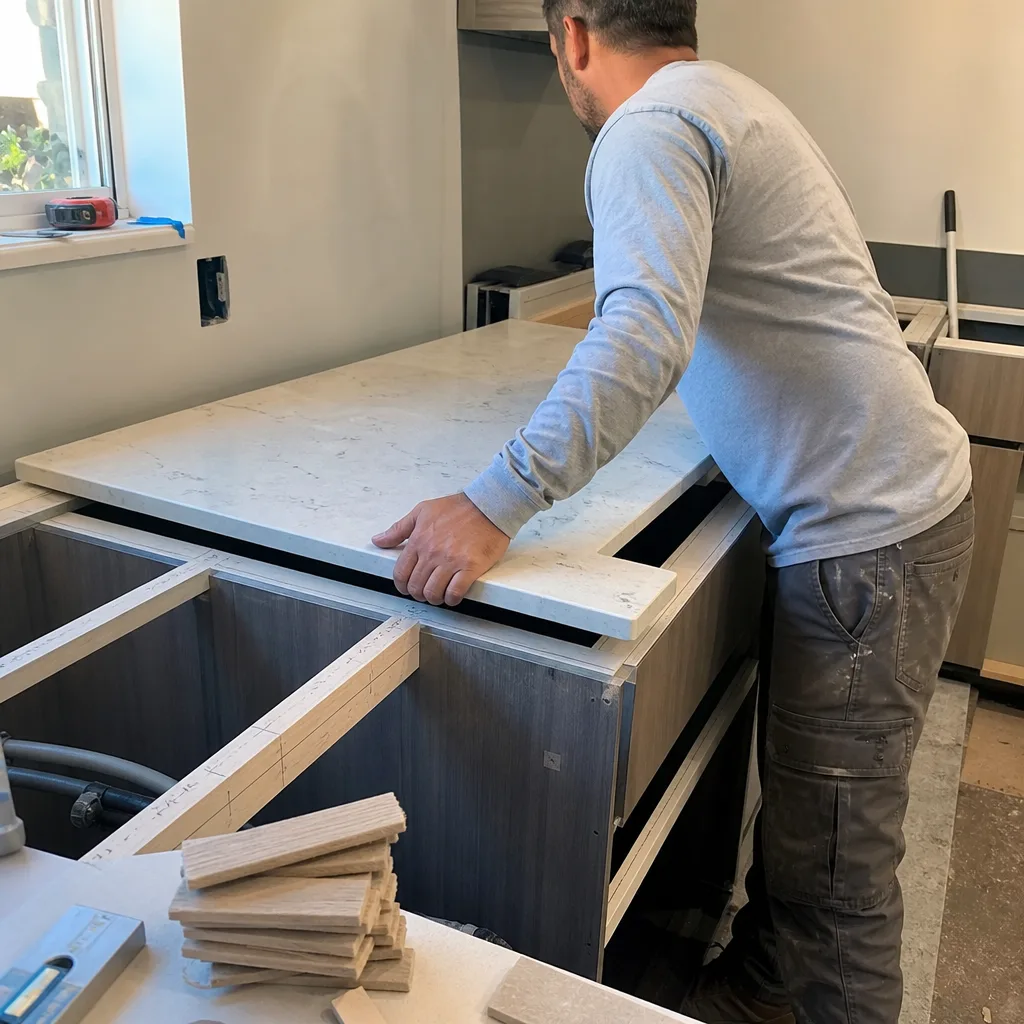
Particleboard and MDF (medium-density fiberboard) core materials absorb moisture at their exposed edges. The laminate or thermofoil face may appear intact while the core swells at joints, causing the characteristic “blowout” where a cabinet door no longer closes flush. In our experience across Rowan Construction Group San Diego home projects, this failure mode appears 18-30 months post-installation in kitchens west of I-5, and 36-48 months in inland valleys where the marine layer penetrates less frequently.
Check these specific points annually, ideally in August when the marine layer pattern is most established:
- Door gap consistency. With all doors closed, the reveal (gap) between adjacent doors should be uniform top to bottom. A gap that narrows toward the bottom indicates lower-cabinet moisture absorption, typically from floor-level air circulation patterns.
- Drawer slide side-play. Pull each drawer fully out, then push it closed with light finger pressure on one side only. A drawer that binds or racks has slide mounting points that have shifted, usually because the cabinet side panel has expanded at the screw locations.
- Shelf pin hole elongation. Remove one adjustable shelf and examine the pin holes. Ovaling or wallowing indicates particleboard core expansion; clean round holes suggest stable construction.
- Toe-kick moisture staining. The toe-kick area is the lowest ventilation point in most cabinet runs. Discoloration or swelling here is often the first visible indicator of moisture cycling, even when upper cabinets appear sound.
Plywood-core construction with marine-grade adhesive resists this cycling far better than particleboard, but the specification must be verified - “all plywood construction” in marketing materials sometimes means plywood sides with particleboard shelves. The documentation checklist below covers how to confirm what you actually received.
For homeowners in coastal neighborhoods like Pacific Beach, Ocean Beach, and Point Loma, we specify exterior-grade phenolic adhesive even on interior cabinet boxes. The material cost difference is roughly 8-12%, but the service life in marine air extends by a factor of three. Under Clause 1 of the Haven Standard, that specification is written into the quote before work starts, not offered as an upgrade after the fact.
Grout, Caulk, and Seismic Micro-Movements
San Diego’s seismic environment is often misunderstood. We don’t experience the dramatic fault ruptures of Northern California, but we do experience continuous micro-seismicity - thousands of tiny movements annually that slowly fatigue rigid materials. A kitchen backsplash or floor tile installation that looked perfect at completion can show hairline patterns at 12-18 months that have nothing to do with installation quality and everything to do with substrate movement.
The distinction matters for maintenance. Some grout cracking requires re-grouting; some requires substrate repair; some requires only monitoring if the crack is stable. Misdiagnosing the type leads to unnecessary expense or missed prevention.
Here’s how to read crack patterns in San Diego kitchens:
- Hairline cracks following grout lines only. These are typically shrinkage cracks in cementitious grout, common in the first heating season. If the crack width is stable at 1/16 inch or less and doesn’t accumulate debris, it can be monitored. Wider or growing cracks need re-grouting with an epoxy-based formulation that accommodates minor movement.
- Cracks crossing tile faces diagonally. This pattern indicates substrate or structural movement, not grout failure. The tile is being stressed beyond its flexural strength. Covering with new grout will fail again within months. A structural assessment is needed, and the tile may need to be removed to inspect the underlying cement board or membrane.
- Caulk separation at plane changes. The joint where countertop meets backsplash, or where tile meets a window frame, should be caulked with a flexible silicone or urethane, not grouted. If this caulk is pulling away from one side, the substrate is moving differentially. Clean removal and re-caulking with a backer rod and high-movement sealant is the correct repair; grouting the gap is not.
- Grout color change with no cracking. Darkening or efflorescence (white powder) indicates moisture migration through the grout body. In San Diego, this is often traced to irrigation overspray against exterior walls, or to failed window flashing that lets marine-layer moisture accumulate in wall cavities. The grout symptom is downstream of a water management problem.
We specify Laticrete SpectraLOCK or equivalent epoxy grout for coastal San Diego kitchens, and we document the batch number on the warranty paperwork. Epoxy grout costs roughly 40% more than cementitious, but it eliminates the porosity that allows marine salt to migrate through and crystallize at the surface. If your renovation used cementitious grout, annual sealing with a penetrating sealer (not a topical coating) is mandatory maintenance, not optional care.
For caulk maintenance, mark your calendar for October, after the summer heat has maximized joint expansion and before the winter rains begin. A tube of quality kitchen-and-bath silicone costs under $10; re-caulking a typical backsplash perimeter takes under an hour. The alternative is water intrusion, substrate damage, and a repair that runs to four figures.
Ventilation Performance and Wildfire Smoke Season
San Diego’s wildfire season typically runs May through October, with peak risk in September and October when Santa Ana winds combine with dry fuel conditions. The 2003 Cedar Fire and 2007 Witch Creek Fire established the pattern: smoke plumes can degrade regional air quality for weeks, and kitchen ventilation systems that were specified for cooking effluent alone are suddenly tasked with maintaining livable indoor air during extended smoke events.
Range hood performance is specified in CFM - cubic feet per minute of air movement. A typical residential gas cooktop requires 100 CFM per 10,000 BTU of burner capacity. A four-burner cooktop at 40,000 BTU total thus needs 400 CFM minimum for cooking ventilation. But wildfire smoke filtration is a different calculation entirely.
Here’s how to verify your hood is still performing to specification:
- Measure actual airflow. A calibrated anemometer placed at the hood capture area should read within 10% of the rated CFM. Consumer-grade anemometers cost $25-40. If your reading is 15% or more below specification, the ductwork likely needs cleaning or the blower motor is degrading.
- Inspect the damper operation. The backdraft damper at the exterior termination should open fully under airflow and seal completely when the hood is off. A damper that hangs partially open admits smoke and particulates continuously. In coastal San Diego, salt corrosion of the damper hinge is the most common failure mode we find during kitchen remodeling in San Diego follow-up visits.
- Check filter condition monthly during smoke season. Baffle filters should be degreased; mesh filters should be inspected for deformation that creates bypass pathways. Carbon filters, if present, have a finite adsorption capacity - typically 6-12 months under normal use, and as little as 2-4 weeks during extended smoke events.
- Verify makeup air provision. High-CFM hoods (400+) require makeup air to avoid depressurizing the house and pulling smoke through every crack. If your renovation included a >400 CFM hood, there should be a documented makeup air strategy - typically a dampered duct from outside or a transfer grille from an adjacent space. Many San Diego homes built before 2010 lack this provision, and retrofitting it is often omitted from kitchen-only renovations.
For wildfire smoke specifically, a range hood running at maximum with a clean filter provides meaningful but incomplete protection. The particle size of wildfire smoke (PM2.5 and smaller) passes through standard mesh filtration. We specify hoods with optional HEPA upgrade paths for kitchen remodeling in San Diego projects where the homeowner’s priority includes smoke-season air quality. The upgrade is a filter cassette change, not a hood replacement, and we document the compatible model numbers in the project file.
If your current hood is underperforming and the duct run is long (more than 15 feet equivalent with elbows), consider that San Diego’s mild climate allows for inline booster fans that would be problematic in freeze-prone regions. An inline fan in the attic space, properly rated for the temperature and accessible for service, can recover 30-40% of airflow lost to duct friction. We install these with service switches at the hood location so the homeowner can verify operation without attic access.
Appliance and Plumbing Systems
The maintenance interface between your renovation and your appliances is often the most neglected zone. Appliances have their own manufacturer maintenance schedules, but the renovation-created conditions - new cabinet surrounds, modified ventilation, relocated plumbing - create interaction effects that neither the appliance manual nor the contractor’s warranty fully addresses.
Dishwasher and sink cabinet: San Diego’s water supply runs moderately hard (7-9 grains per gallon in most service areas), and the combination of hard water with marine-layer humidity produces a distinctive failure pattern at the dishwasher-to-sink connection. The rubber dishwasher tailpiece gasket hardens faster in humid cabinet environments, developing a slow weep that deposits mineral scale before it becomes a visible leak. By the time you see water, the cabinet floor is often swollen.
Annual maintenance: remove the lower dishwasher panel and inspect the connection point with a flashlight and mirror. Look for white or greenish scale deposits on the hose clamp or tailpiece threads. If present, replace the gasket and clamp - a $6 part and 15 minutes. The alternative is cabinet floor replacement, which in a frameless European-style cabinet typically requires replacing the entire base unit.
Refrigerator water line: If your renovation included a relocated refrigerator with an icemaker line, the connection method matters. Saddle valves pierce the copper supply and are prohibited by current code, but they’re still found in renovations where the contractor took shortcuts. A proper connection uses a stop valve with a 1/4-inch compression outlet. The saddle valve creates a stress riser that will eventually crack; the timeline is typically 3-7 years in San Diego’s water chemistry. Check your documentation for the valve type, and if you find a saddle valve, schedule replacement before it fails.
Gas cooktop and shutoff valve: The flexible gas connector behind your cooktop has a 15-year rated life in dry conditions, but proximity to the dishwasher’s heat and moisture can reduce this. The shutoff valve should operate smoothly through its full range; stiffness indicates corrosion of the ball or stem packing. Under California Plumbing Code, homeowners may operate this valve but may not replace it - that’s licensed work. If operation is stiff, call a licensed plumber or your original contractor.
Garbage disposal and sink flange: The three-bolt mounting assembly that secures the disposal to the sink is frequently overtightened during installation, deforming the sink flange and creating a gap that admits water. In our kitchen remodeling in San Diego experience, this overtightening is the leading cause of “mystery” cabinet floor damage under sinks. The correct torque is hand-tight plus 1/4 turn with a wrench - any more risks flange distortion. Annual inspection should show no gap between flange and sink surface, and no rotation of the disposal body when manually twisted.
Signed Documentation and Warranty Verification
A kitchen renovation generates paperwork that most homeowners file and forget. The critical verification points are at 1 year and 3 years post-completion, when manufacturer warranties expire and contractor workmanship guarantees transition.
Here’s what should be in your file, and what to verify at each checkpoint:
| Document | 1-Year Verification | 3-Year Verification |
|---|---|---|
| Signed change order log | Confirm all change orders were signed before work proceeded; this is your cost protection record | N/A - historical reference only |
| Written flat-price quote with scope | Compare actual final invoice to quote; variance should be under 5% per Haven Standard discipline | N/A - historical reference only |
| Material specifications with brand and model | Verify installed materials match specifications; photograph any discrepancies while warranty is active | Manufacturer warranty status check; many cabinet finishes carry 5-year limited warranties that begin at installation |
| Appliance warranty registrations | Confirm all appliances are registered; unregistered appliances may carry only statutory warranty | Extended warranty purchase decision point if offered |
| Plumbing and electrical permit final inspections | Confirm final inspection passed; unpermitted work can complicate future sale or insurance claims | Retain for property sale disclosure |
| Photo record of installation | Compare current condition to baseline photos; early degradation is often visible in comparison | Baseline for any insurance or warranty claim |
| 365-Day Done Right Promise documentation | Active period - any deficiency can be reported under promise terms | Transitioned to standard workmanship warranty; verify terms page is still accessible |
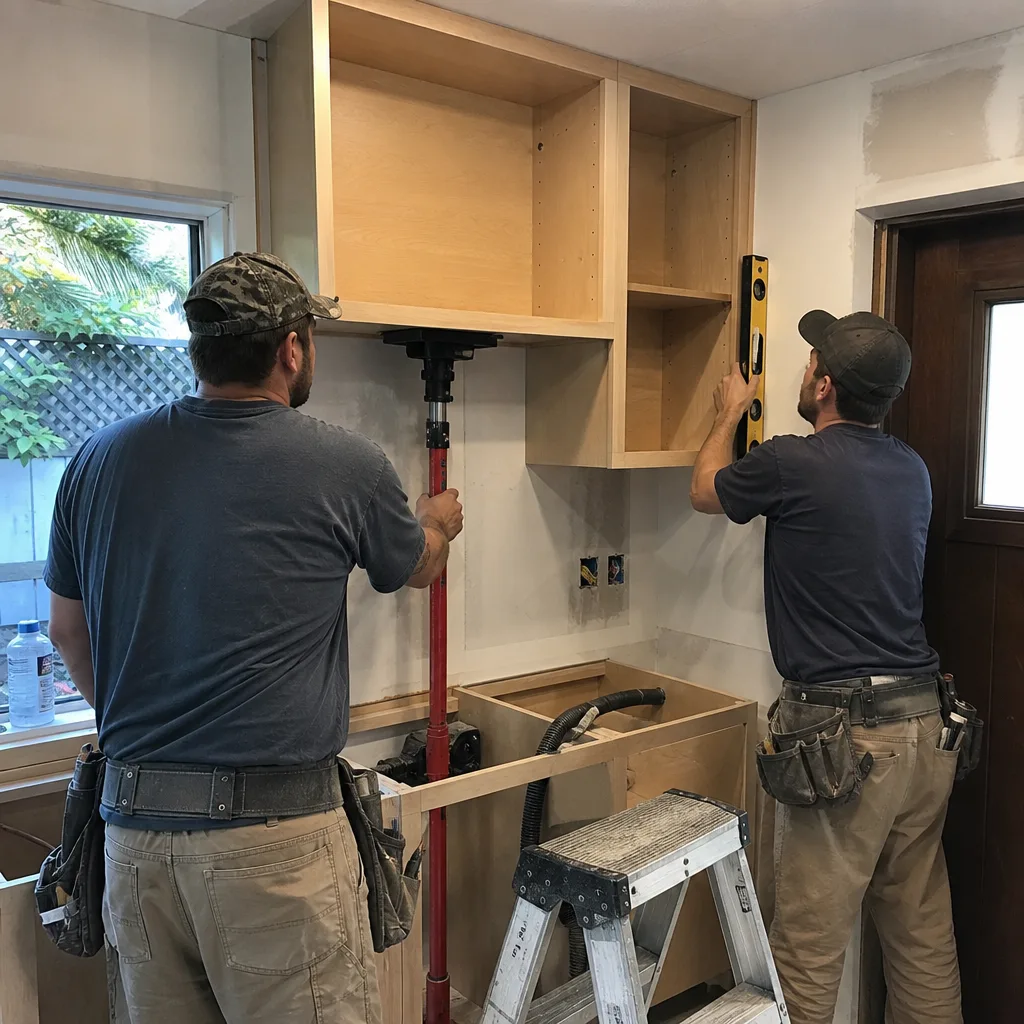
The photo record deserves particular emphasis. Rowan Construction Group delivers a documented photo record on every visit as standard, not as an upgrade. These images are stored with project metadata and made available to the homeowner. At the 1-year mark, we recommend a side-by-side review: current phone photos against the installation record. Subtle shifts - grout color change, hardware position, cabinet alignment - are often invisible in daily use but obvious in comparison.
For homeowners who did not receive a structured photo record, create your own baseline now. Photograph every cabinet interior, every grout joint, every plumbing connection, and every appliance nameplate. Store with cloud backup and the installation date in the filename. This documentation transforms future warranty discussions from memory-based to evidence-based.
Your San Diego Maintenance Calendar
San Diego’s climate allows a simplified schedule compared to four-season regions. Concentrate maintenance in two annual sessions rather than spreading thinly across quarters.
March-April Session (Pre-Summer):
- Inspect all coastal-exposed hardware for tea staining or pitting; replace any failing fasteners with 316-grade equivalent
- Run range hood at maximum speed; measure airflow with anemometer or verify by feel against specification
- Clean and inspect baffle or mesh filters; order replacement carbon filters if HEPA upgrade is installed
- Test all GFCI outlets in kitchen; press test button and verify reset function
- Inspect dishwasher tailpiece gasket for scale or weep evidence
- Operate gas shutoff valve through full range; note any stiffness for professional follow-up
October-November Session (Pre-Winter):
- Inspect grout and caulk at all plane changes; re-caulk as needed before rain season
- Check cabinet door gaps and drawer slide operation for marine-layer season effects
- Inspect toe-kick areas for moisture staining or swelling
- Verify exterior damper operation on range hood duct termination
- Clean refrigerator condenser coils (more frequently if pets present)
- Review documentation file; verify warranty registrations current and photo record accessible
The total annual time investment is 4-6 hours for a typical kitchen. Spread across two sessions, this is manageable without professional assistance for most homeowners. The critical distinction is knowing which observations require action versus monitoring - the sections above provide those thresholds.
Common Mistakes to Avoid
- Using bleach-based cleaners on grout. Sodium hypochlorite degrades cementitious grout and destroys the colorant in epoxy formulations. In San Diego’s hard water, it also precipitates calcium deposits that accelerate surface erosion. Use pH-neutral cleaners only.
- Ignoring “minor” hardware corrosion. A single tea-stained hinge indicates specification error that likely affects all hardware. Replacing one visible failure while others degrade unseen wastes money and masks the systemic issue.
- Re-caulking over old caulk without full removal. New caulk bonds to old caulk, not to the substrate. The old caulk continues to release from its original bond, and the new application fails within months. Complete removal with a plastic scraper and solvent residue cleanup is mandatory.
- Running high-CFM hood without makeup air during smoke events. The hood depressurizes the house, pulling smoke through every envelope leak. If your hood is >400 CFM and you lack documented makeup air, don’t run it at maximum during wildfire smoke - use portable HEPA filtration instead.
- Deferring documentation review until a problem appears. Warranty periods expire whether you verify them or not. The 1-year and 3-year checkpoints are calendar-driven, not condition-driven.
- Assuming “stainless steel” means corrosion-proof in coastal San Diego. Without the grade specification, you don’t know what you have. The magnet test only identifies non-austenitic grades; it won’t distinguish 304 from 316.
When to Call a Professional
Some maintenance observations indicate conditions beyond homeowner scope. Call a licensed contractor or the appropriate trade professional if you find: diagonal cracks crossing tile faces (structural movement); gas valve stiffness or odor (safety hazard); electrical outlet failure or panel warmth (fire risk); cabinet floor swelling that doesn’t dry within 48 hours of removing moisture source (substrate replacement); or range hood airflow below 70% of specification with clean filters (duct or motor failure).
For homeowners who want a professional assessment of their kitchen’s current condition, Rowan Construction Group San Diego offers free estimates in San Diego - call (858) 434-8926. We’ll review your documentation, inspect the specific failure points this checklist identifies, and provide a written assessment with no obligation. If your kitchen was completed by another contractor, we also offer our Free Second Opinion on any written estimate for remediation work.
Frequently Asked Questions
Annual maintenance for a properly specified San Diego kitchen runs $150-400 in materials and supplies, or $600-1,200 if you hire a handyman for the semi-annual sessions. The cost is front-loaded in years 1-2 if the original specification was inadequate for marine exposure - replacing 304-grade hardware with 316-grade across a full kitchen runs $300-600 in parts alone. Call (858) 434-8926 for an exact assessment of your kitchen’s current condition - estimates are free.
No. Under Clause 1 of the Haven Standard, the written price is delivered before any work starts, every time. A maintenance inspection estimate is a fixed scope with a fixed price. If we find conditions that require additional work, we provide a separate written quote for that scope; no work proceeds on a change until the change order is signed. This discipline is why Rowan’s projects finish within a few percent of the agreed cost across 4,000-plus jobs since 2007.
Pure maintenance - filter replacement, caulk renewal, hardware replacement - does not require permits in San Diego. Work that modifies plumbing, electrical, or gas systems does require permits, and the contractor must pull them. We pull all required permits and schedule inspections as standard on any work that crosses that threshold; the permit number and inspection schedule are documented in your project file.
Check your documentation file for material specifications with grade callouts. For hardware, look for “316” or “A4” stamped on visible fasteners - though stamping is often omitted on decorative components. For cabinets, the specification should state “exterior-grade phenolic adhesive” or “marine-grade plywood” if the project was designed for coastal exposure. If your documentation lacks this detail, a professional assessment can identify the materials installed and their suitability for your specific San Diego location. Call (858) 434-8926 to schedule - estimates are free.
Don’t rely on it as your primary smoke filtration during severe events. Portable HEPA air purifiers rated for the kitchen’s square footage provide better PM2.5 removal without the depressurization risk. For a permanent solution, we can assess whether your hood supports a HEPA filter upgrade or whether duct modifications can improve airflow without requiring makeup air provisions. The assessment is documented with measured airflow before and after any modification.
A properly specified and maintained kitchen in San Diego’s coastal climate should show only minor maintenance needs (caulk renewal, filter replacement) for 8-12 years. Major component replacement - cabinet boxes, tile substrate, ventilation ductwork - typically becomes relevant at 15-20 years. The critical variable is the original material specification; a kitchen built with inland-grade materials in a coastal location can require major intervention at 3-5 years. The maintenance checklist above is designed to catch that mismatch early, while correction is still cost-effective.
The Bottom Line
San Diego’s kitchen maintenance requirements are defined by salt air, marine layer humidity, seismic micro-movements, and wildfire smoke exposure - not by the freeze-thaw cycles and heavy precipitation that generic checklists assume. The homeowners who protect their investment are those who inspect for the specific failure modes this climate produces, who verify their materials were specified for marine exposure, and who maintain their documentation with the same discipline they apply to their home. The annual time investment is modest; the cost of deferred attention is not. Schedule your maintenance sessions, keep your records current, and address observations at the threshold where intervention is still preventive rather than remedial.
Written by Grant Rowan, Owner at Rowan Construction Group San Diego, serving San Diego since 2007.