
Last updated September 25, 2026
Free written scope consultation - allowances, timeline, and change-order rules on paper before a single trade is scheduled






 Before
 After
After Before
 After
After Before
 After
AfterConstruction Warning Signs: A San Diego Homeowner’s Reference Guide
The CSLB’s sting operations in San Diego County have repeatedly caught unlicensed contractors operating with fake license numbers - digits that sound valid in conversation but return a different business name or a suspended status when checked at CSLB.ca.gov. Most homeowners never verify. In our experience across 4,000-plus projects since 2007, the disputes that cost San Diego homeowners the most money rarely start with a bad feeling. They start with a document that was missing a clause, a bid that obscured the scope, or a license number that was never checked. This guide catalogs the documentary warning signs that precede most construction disputes in San Diego, with specific steps to verify what you’re being told before anyone picks up a tool.
Quick Answer
The most reliable construction warning signs in San Diego are documentary, not behavioral. Check the contractor’s CSLB license number against the name on the bid, demand material specifications in writing, verify the payment schedule complies with California’s 10%/$1,000 deposit cap, and confirm the contract includes a written change-order process with a specified completion date. These four checks eliminate the majority of dispute-prone contractors before work begins.
Table of Contents
- How to Verify a Contractor’s License in San Diego
- Bid Document Red Flags
- Contract Clause Red Flags
- Payment Schedule Red Flags
- San Diego-Specific Scams and Seasonal Risks
- What Proper Documentation Looks Like
- Common Mistakes to Avoid
- When to Call a Professional
 Before
 After
AfterHow to Verify a Contractor’s License in San Diego
California requires any home improvement contract over $500 to be performed by a contractor licensed by the Contractors State License Board. The verification process takes under two minutes and is the single most effective filter against fraud.
Step-by-Step License Verification
- Obtain the full license number. Ask for the seven-digit CSLB number, not a business license or city permit. A business license is not a contractor license.
- Visit CSLB.ca.gov and select “Check a License.” Enter the number exactly as provided.
- Cross-reference the business name. The name on the CSLB record must match the name on the bid and contract exactly. A common San Diego scam: the license belongs to a dormant or defunct entity, and the contractor is operating under a similar but different DBA.
- Verify the classification. A C-36 Plumbing contractor cannot legally perform structural work. A B-General Building contractor can, but only if the project involves two or more unrelated trades. For a kitchen remodeling in San Diego that moves walls and reroutes plumbing, confirm both B and C-36 classifications are present, or that the general holds the B and will subcontract the plumbing to a properly classified licensee.
- Check bond and workers’ compensation status. The CSLB record shows active bond and whether workers’ comp is required and maintained. In California, contractors without employees may file an exemption, but if they bring a crew, the exemption is invalid and the homeowner assumes liability for injuries.
- Review disciplinary history. CSLB records show suspensions, revocations, and citations. A recent suspension for unlicensed activity is an automatic disqualifier.
We have seen bids in San Diego where the license number provided was valid but belonged to a contractor in Sacramento who had no knowledge their number was being used. The CSLB’s “Instant License Check” mobile app makes this verification possible at the kitchen table before signing anything.
Red Flags in License Presentation
- The contractor provides only a business license number or city tax certificate
- The license number is “pending” or “being transferred” - work cannot legally proceed
- The name on the CSLB record differs from the name on the bid by even a single word
- The contractor asks you to pull the permit yourself to “save money” - this is often a tactic to obscure unlicensed status
- The classification does not cover the work described (a C-54 Tile contractor proposing structural wall removal)
Bid Document Red Flags
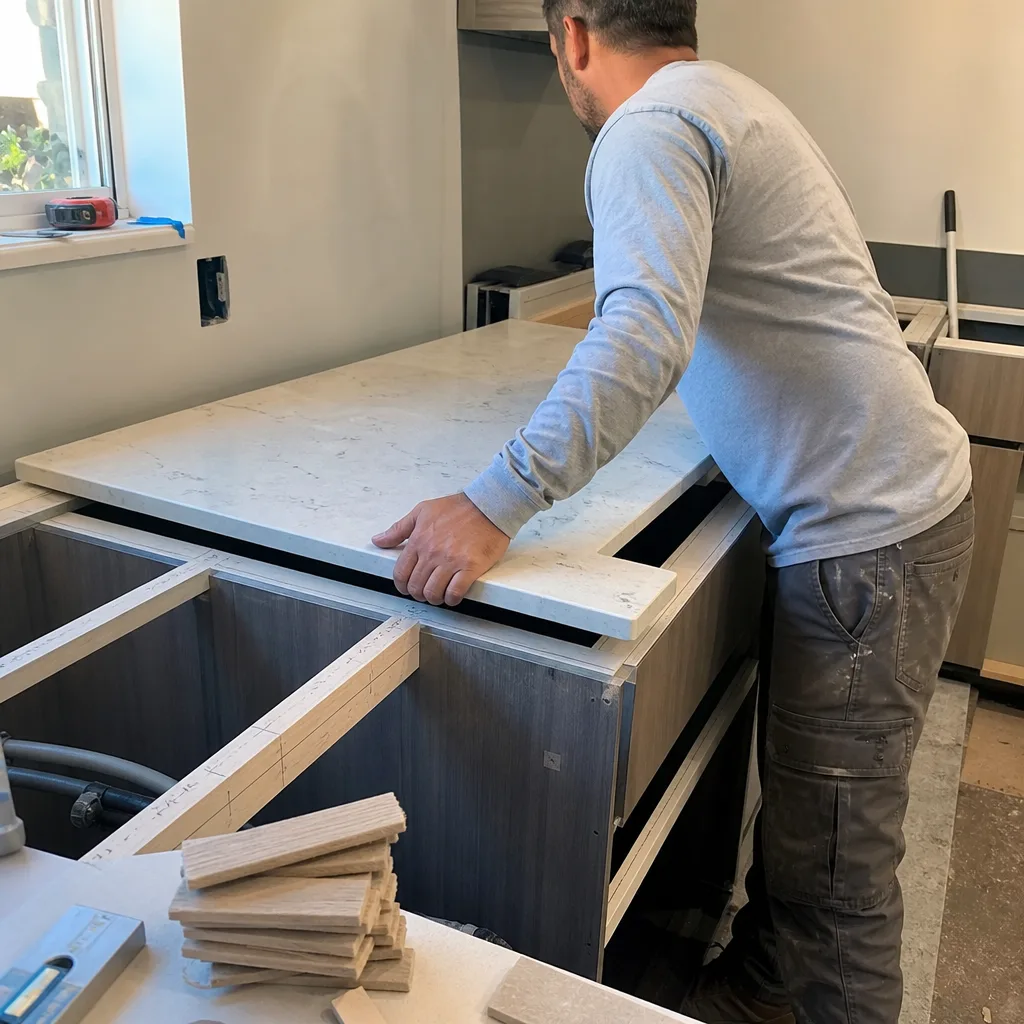
A bid is a scope document, not a price. The price is only as reliable as the scope it describes. In San Diego’s construction market, where material costs fluctuate and labor availability varies by season, a bid that obscures either element is designed to accommodate change orders later.
The Lump-Sum Bid Without Material Specifications
We regularly review competitor bids during our Free Second Opinion service. The most common deficiency: “Install new kitchen cabinets: $18,500” with no brand, line, or construction method specified. This leaves the contractor free to source the lowest-grade particleboard box available, or to claim that the homeowner’s expectation of solid-wood dovetail drawers was never part of the agreement.
A proper bid for kitchen remodeling in San Diego specifies at minimum: cabinet brand and product line (KraftMaid Canvas or Wellborn Estate, for example), box construction (half-inch plywood vs. three-quarter-inch), door style and finish, hardware brand, and soft-close inclusion. Without these, the bid is not comparable to any other and cannot be enforced.
Permits Listed as “TBD” or “By Others”
In San Diego, permit requirements are not ambiguous. The San Diego Development Services Department publishes clear triggers: structural modifications, electrical panel upgrades, plumbing relocation, and any work exceeding $500 in value requires a permit. A bid that lists permits as “to be determined” is either ignorant of local code or deliberately deferring a cost that will appear later as a change order.
We pull permits on every project that requires them, include the cost in our written flat price, and schedule inspections as part of our project timeline. Under Clause 1 of the Haven Standard, the price is written before anyone starts - permits included, not appended later.
Labor Described in Deliverables Rather Than Hours
“Install backsplash” tells you nothing. “18 hours tile setter labor, including surface prep, waterproof membrane application, tile layout, cutting, setting, grouting, and sealant” tells you what you’re buying and allows you to verify reasonableness against market rates. San Diego tile setter rates typically range from $65 to $95 per hour for skilled residential work. A bid that conceals hours conceals whether the labor allowance is adequate for quality work or deliberately understated to win the job.
Missing Allowances or Contingencies
Older San Diego homes, particularly in neighborhoods like North Park, South Park, and Golden Hill, frequently conceal outdated wiring, asbestos-containing materials, or non-compliant foundations. A bid with zero contingency allowance for concealed conditions is either naive or dishonest. Our bids include a written contingency range, typically 5-10% depending on the age and condition of the home, with a signed authorization required before any contingency funds are deployed.
Bid Red Flags Checklist
- No material brand or product line specified for any major component
- Permit costs excluded or marked “TBD”
- No breakdown of labor hours or unit costs
- Zero contingency for concealed conditions in pre-1980 construction
- No specified start date or completion date
- Verbal allowances (“we’ll figure out the countertop later”) without dollar values
- Subcontractor names and license numbers not provided
Contract Clause Red Flags
The contract is where disputes are won or lost. California’s Business and Professions Code Section 7159 mandates specific clauses in home improvement contracts. Their absence is not a technicality; it is a violation that can void the contract and expose the homeowner to unrecoverable losses.
Missing Change-Order Process
Every construction project encounters conditions that require adjustment. The question is whether those adjustments are documented and agreed before the work proceeds. Our discipline, acquired through The Haven Standard and applied across 4,000-plus projects, is simple: no work proceeds on a change until the change order is signed. The contract must specify the exact process - written description, revised price, signed authorization, and revised completion date.
A contract with no change-order clause, or with language like “contractor may adjust price as necessary,” grants unlimited discretion. We have reviewed San Diego homeowner complaints where the final invoice exceeded the contract price by 40% with no single change order exceeding $500 - death by a thousand undocumented cuts.
No Specified Completion Date
California law requires a “approximate start date and completion date” in every home improvement contract. Without this, the contractor has no enforceable timeline obligation. In San Diego’s climate, where outdoor work is feasible year-round, contractors sometimes omit completion dates to maintain scheduling flexibility across multiple jobs. The homeowner bears the cost in extended temporary housing, disrupted routines, and projects that drag across seasons.
Our contracts specify a completion date with a written understanding of weather-delay provisions for roofing in San Diego during the occasional winter storm, and a clear process for acceleration if delays exceed the contractual threshold.
Arbitration Clauses That Waive CSLB Complaint Rights
Some San Diego contractors include binding arbitration clauses that require disputes to be resolved through private arbitration and explicitly waive the homeowner’s right to file a CSLB complaint. This is a significant red flag. The CSLB complaint process is often the most effective recovery mechanism for homeowners, particularly for projects under $50,000 where litigation costs are prohibitive.
Review any arbitration clause carefully. A clause that requires arbitration but preserves CSLB complaint rights is standard. A clause that waives CSLB complaints is designed to eliminate your most accessible remedy.
Missing 3-Day Right to Cancel
California law grants homeowners three business days to cancel any home improvement contract signed in their home. The contract must include this notice in at least 10-point type. Its absence invalidates the contract and may entitle the homeowner to recover all payments made.
Contract Clause Red Flags
- No written change-order process with signature requirement
- Completion date absent or marked “weather permitting” without definition
- Arbitration clause that waives CSLB complaint rights
- Missing 3-day right-to-cancel notice
- No license number printed on the contract (required by law)
- No workers’ compensation certificate or exemption documentation
- Blank spaces in the contract - never sign a contract with unfilled fields
Payment Schedule Red Flags
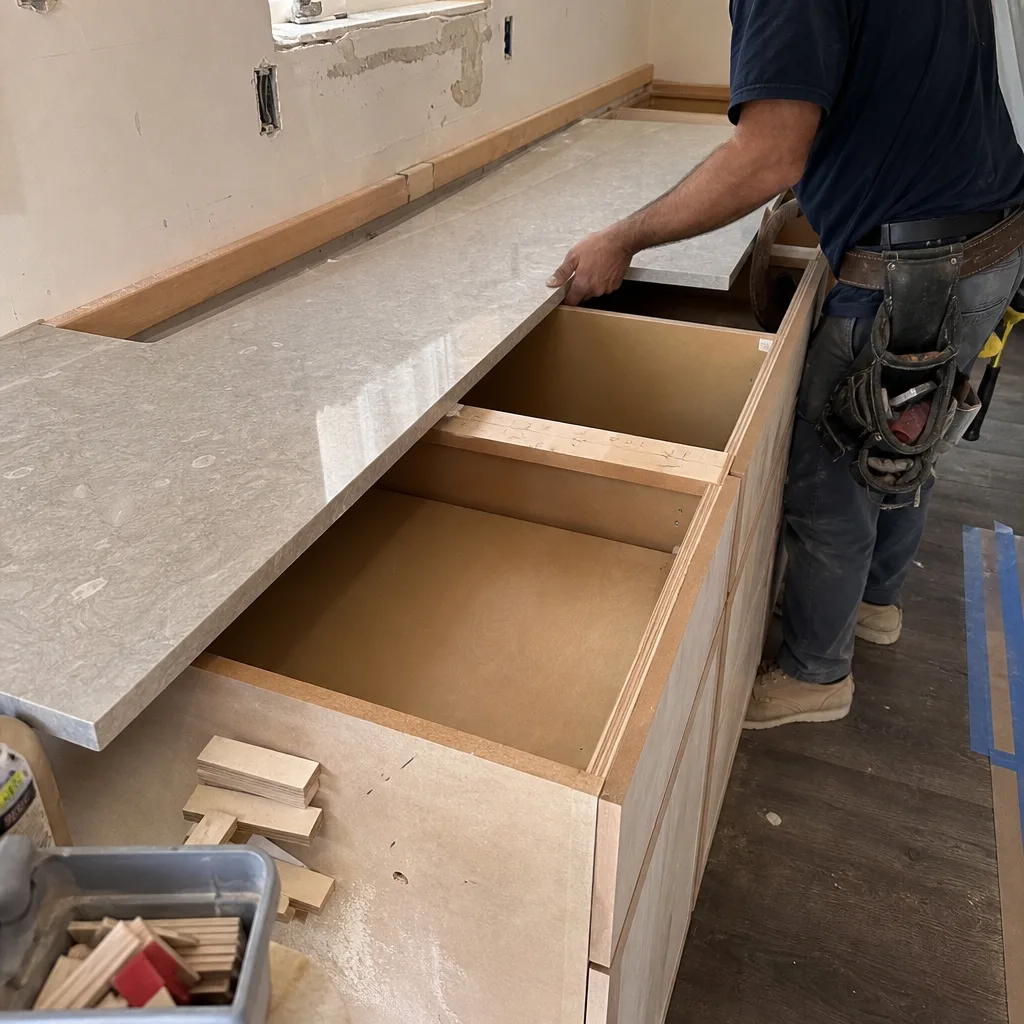
California law caps the down payment for home improvement contracts at 10% of the contract price or $1,000, whichever is less. This is not a suggestion; it is Business and Professions Code Section 7159.5. A contractor who demands more is either ignorant of the law or counting on the homeowner’s ignorance.
The Large Upfront Deposit
We have encountered San Diego homeowners who paid 50% deposits for kitchen remodels, only to have the contractor disappear after demolition. The 10%/$1,000 cap exists precisely because material suppliers typically extend 30-day terms, and a legitimate contractor does not need homeowner capital to float material purchases.
Our payment schedules are tied to inspection milestones, not calendar dates. For a typical bathroom remodeling in San Diego: 10%/$1,000 at contract signing, 25% at rough inspection approval, 25% at trim inspection approval, 35% at substantial completion, and 5% retention until final punch-list completion. Each payment is contingent on verified progress, not trust.
Cash-Only Requirements
A contractor who insists on cash payment is avoiding a paper trail. This eliminates the homeowner’s ability to dispute charges, prevents the transaction from appearing on the contractor’s tax returns (suggesting systematic tax evasion), and often indicates the contractor is operating without workers’ compensation coverage. Legitimate contractors accept checks and credit cards; the processing fee is a cost of doing business transparently.
Payment Not Tied to Inspection Milestones
A payment schedule based on calendar dates - “25% on day 14, 25% on day 30” - rather than verified progress creates misaligned incentives. The contractor is paid for time elapsed, not work completed. In San Diego’s competitive market, where contractors may overcommit to multiple projects, this structure allows a contractor to collect payments while prioritizing newer jobs.
Final Payment Before Final Inspection
Never make final payment before the final building inspection is passed and a certificate of occupancy or final approval is issued. Some San Diego contractors pressure homeowners to pay in full to “keep the crew happy” or “order the final materials.” The correct response: the crew is paid by the contractor, not the homeowner, and materials are the contractor’s obligation under the written scope.
California Legal Payment Schedule
| Payment Trigger | Typical Percentage | Verification Required |
|---|---|---|
| Contract signing | 10% or $1,000 max | Signed contract, license verified |
| Rough inspection passed | 20-30% | Inspector sign-off, photo record |
| Trim/Mechanical inspection passed | 20-30% | Inspector sign-off, photo record |
| Substantial completion | 25-35% | Walk-through with punch list |
| Final inspection passed, punch list complete | 5-10% retention | Final certificate, documented completion |
San Diego-Specific Scams and Seasonal Risks
San Diego’s climate and geography create specific seasonal risks that predatory contractors exploit. Understanding these patterns helps homeowners recognize solicitation timing as a warning sign in itself.
Post-Storm Roofing Solicitations
After Santa Ana wind events or the occasional winter storm, San Diego neighborhoods see an influx of out-of-area roofing contractors with magnetic door signs and temporary local phone numbers. These operators typically offer “free inspections,” find “damage” that requires immediate repair, and pressure homeowners to sign assignments of benefits or direct insurance payments.
Legitimate roofing in San Diego does not require door-to-door solicitation. Established contractors have ongoing local presence, verifiable addresses, and no need to create artificial urgency. We inspect roofs in San Diego year-round, document findings with photos, and provide written reports with no obligation - the photo record is included as standard, not sold as an upgrade.
Permit-Pulling Offers from Unlicensed Subcontractors
A common arrangement in San Diego’s ADU boom: an unlicensed builder offers to perform all construction work if the homeowner pulls the owner-builder permit. This is illegal if the work exceeds $500 and the builder is unlicensed, and it exposes the homeowner to full liability for code violations, injuries, and defective work. The CSLB actively investigates these arrangements, and homeowners have been held personally liable for unpaid subcontractor liens in cases where the unlicensed builder abandoned the project.
For Rowan Construction Group San Diego home additions and ADUs, we pull all required permits, schedule all inspections, and include permit costs in our written flat price. The permit record is public documentation that the work was performed under licensed, insured, and bonded supervision.
“City Inspector Referral” Frauds
Following major weather events or in the wake of news coverage about code enforcement, some San Diego homeowners receive calls from individuals claiming to be city inspectors who “noticed code violations” and can “refer you to a qualified contractor.” Genuine San Diego Development Services inspectors do not solicit work or make referrals. They issue notices of violation through formal channels, with appeal rights and specific timelines.
Material Substitution Scams in Coastal Zones
San Diego’s coastal climate, with salt air and higher humidity, requires specific material selections that inland contractors may not understand. We have seen bids for La Jolla and Del Mar properties that specified standard galvanized fasteners rather than marine-grade stainless, or vinyl windows rather than fiberglass or properly coated aluminum. The substitution is often presented as a cost savings, but the actual cost is premature failure in a corrosive environment.
Our sourcing across fifty-plus vetted brands includes coastal-appropriate specifications - Therma-Tru fiberglass entry doors with marine-grade hardware, for example, or ViewLux coastal-series windows with enhanced corrosion resistance - and these are written into the scope, not substituted later without authorization.
What Proper Documentation Looks Like
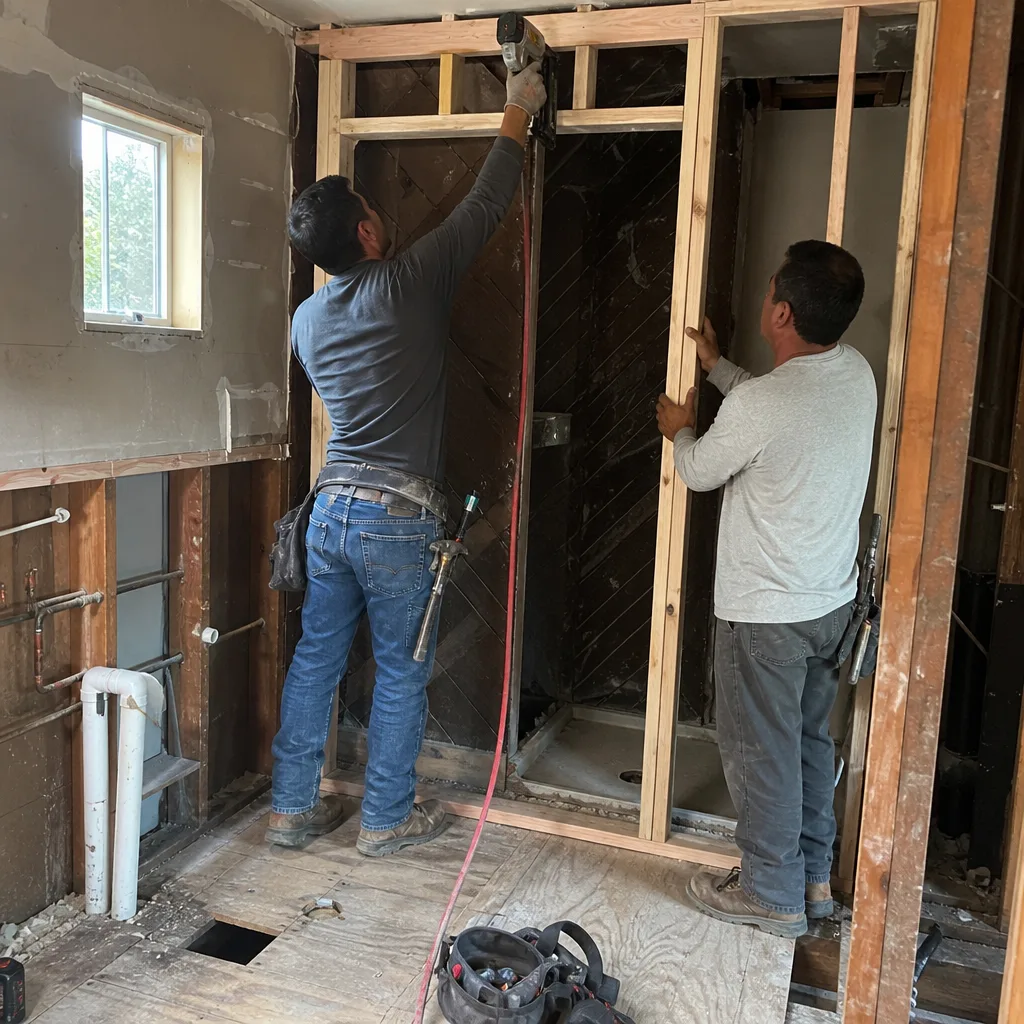
The inverse of warning signs is a documentation standard that eliminates ambiguity. At Rowan Construction Group, our documentation protocol - The Haven Standard - was developed precisely because most disputes originate in what was never written down.
The Written Price Before Any Work Starts
Every project receives a flat written price with a written scope and a written warranty. Not an estimate range, not a “plus time and materials” arrangement, and never “call for a quote.” The price is derived from material takeoffs with specified brands, labor hour projections with crew composition, permit fees verified with San Diego Development Services, and a contingency range with written authorization requirements.
This is Clause 1 of the Haven Standard, and it is non-negotiable. We have maintained project costs within a few percent of the agreed price across 4,000-plus jobs because no work proceeds without a written number that accounts for the full scope.
The Signed Change Order
When conditions require adjustment - and in San Diego’s older housing stock, they often do - the process is administrative before it is construction. Written description of the change, revised price with full breakdown, revised completion date, and signed authorization by both parties. No exceptions. The discipline that Haven acquired Rowan for is not bureaucratic; it is the reason homeowners do not receive surprise invoices.
The Documented Photo Record
Every visit by our crews produces a documented photo record: pre-existing conditions, work-in-progress at defined milestones, and completed work with inspection results. This is included as standard, not offered as an upgrade. The customer leaves with evidence of what was found and what was done, timestamped and organized by project phase.
The 365-Day Done Right Promise
Our warranty is printed on every page and backed by a terms page, not an asterisk. If it is not done right, Rowan makes it right - backed by The Haven Standard, not a handshake. The specific terms, exclusions, and claim process are written and available before contract signing.
What to Expect from Any Legitimate Contractor
- Written flat price with material brands and labor hours specified
- License number printed on the contract, verifiable at CSLB.ca.gov
- Workers’ compensation certificate or valid exemption documentation
- Permit costs included with verification of required permits
- Payment schedule tied to inspection milestones, not calendar dates
- Written change-order process with signature requirement
- Specified completion date with weather-delay provisions where applicable
- Written warranty with specific terms and duration
Common Mistakes to Avoid
- Verifying the license number verbally but not at CSLB.ca.gov. Fake numbers are designed to sound plausible. The database is the only verification that matters, and it takes 90 seconds.
- Comparing bids without comparable scopes. A $45,000 kitchen bid with KraftMaid cabinets and a $38,000 bid with “cabinets TBD” are not comparable. The lower bid is incomplete, not cheaper.
- Accepting “permit optional” for work that clearly requires it. In San Diego, moving a wall, upgrading an electrical panel, or relocating plumbing always requires a permit. The contractor who suggests otherwise is avoiding scrutiny, not saving you money.
- Paying the final retention before final inspection. The 5-10% retention is your only leverage for punch-list completion. Release it only when the final certificate is in hand.
- Signing a contract with blank fields. Any unfilled space is a space that can be filled later with terms you did not agree to. Initial line-item deletions and ensure all blanks are completed or crossed out.
- Hiring based on availability rather than documentation. The contractor who can start tomorrow may be available because their last project ended in dispute. Documentation quality predicts project outcome better than schedule availability.
- Ignoring neighborhood-specific risks. San Diego’s canyon communities, coastal zones, and historic districts each have specific code requirements. A contractor unfamiliar with your neighborhood’s particularities - brush clearance in Rancho Santa Fe, coastal commission jurisdiction in Del Mar, historic review in Mission Hills - will encounter delays and change orders that a local specialist would anticipate.
When to Call a Professional
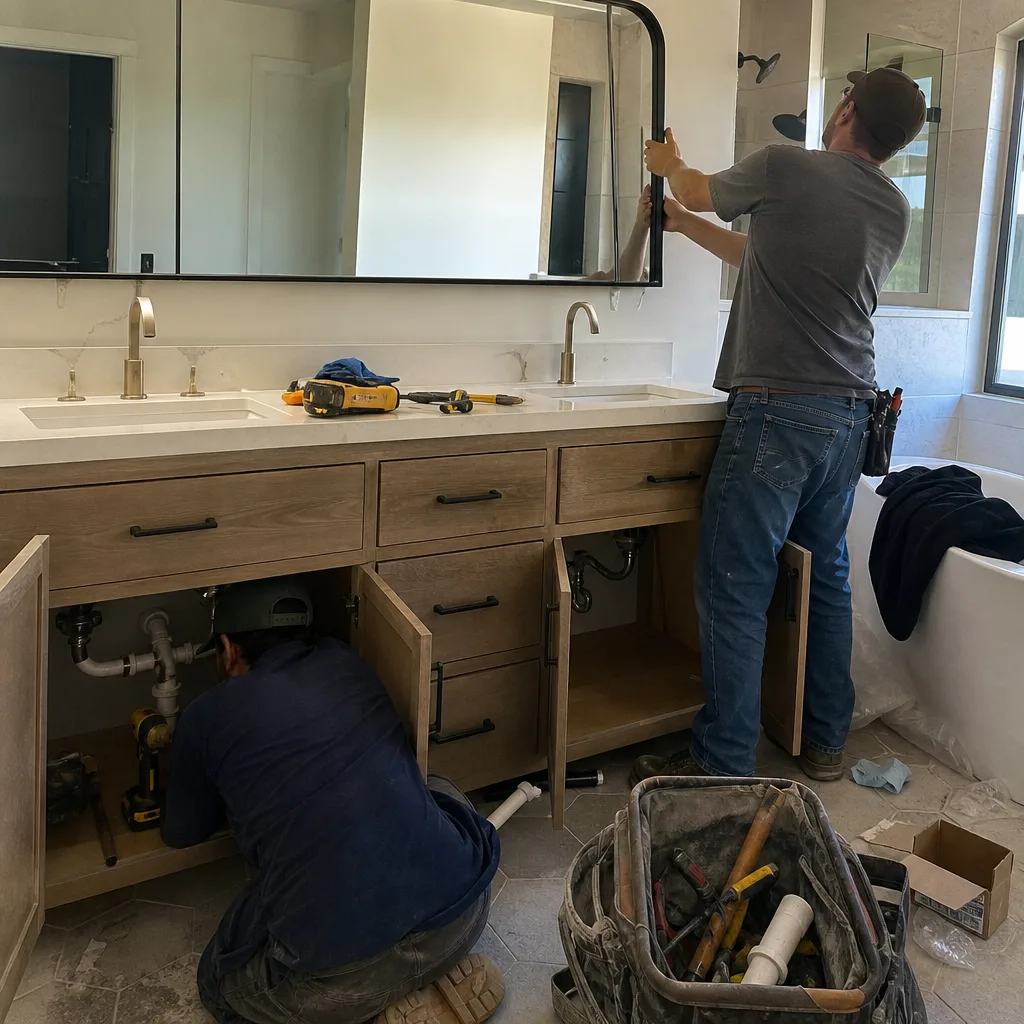
Call a licensed, verified professional when any of the following conditions apply: the project involves structural modification, electrical or plumbing work, or exceeds $500 in value; the home was built before 1980 and may contain asbestos, lead, or outdated systems; the project requires permits and you are uncertain of the scope; or you have received a bid that lacks material specifications, a completion date, or a written change-order process.
Rowan Construction Group San Diego offers free estimates in San Diego - call (858) 434-8926. We also provide a Free Second Opinion on any written estimate: bring a competitor’s quote and we will review it line by line at no charge, identifying scope gaps, pricing anomalies, and clause deficiencies before you commit. Every estimate we provide is a flat written price with specified materials, defined labor, and a documented record - because Clause 1 of the Haven Standard is the whole point.
Frequently Asked Questions
California law caps the deposit at 10% of the contract price or $1,000, whichever is less. Any demand above this is illegal for home improvement contracts. Call (858) 434-8926 for a free estimate with a compliant payment schedule.
Visit CSLB.ca.gov, select “Check a License,” and enter the seven-digit number. Verify the business name matches the bid exactly, the classification covers the proposed work, and the bond and workers’ compensation status are active. The entire process takes under two minutes.
A proper bid specifies cabinet brand and line (KraftMaid, Wellborn, or equivalent), countertop material and brand (Cambria, Caesarstone, or equivalent), appliance rough-in specifications, plumbing fixture brands (Kohler, Toto, or equivalent), permit costs, and a defined labor hour allowance. Without these, the bid is not enforceable or comparable.
No, for work that triggers permit requirements. Structural changes, electrical panel upgrades, plumbing relocation, and projects exceeding $500 all require permits through San Diego Development Services. A contractor who proposes unpermitted work is exposing the homeowner to code violations, insurance denial, and resale complications.
Post-storm roofing solicitations, where out-of-area contractors with temporary local presence pressure homeowners into immediate repairs and insurance assignments. Legitimate roofing contractors do not require door-to-door solicitation and do not demand immediate decisions.
At Rowan Construction Group, the price does not change unless a signed change order documents the scope adjustment, revised price, and revised completion date. This discipline has kept our projects within a few percent of the agreed price since 2007. Contractors without a written change-order process typically see 15-40% cost overruns.
The Bottom Line
The contractors who create lasting problems for San Diego homeowners are rarely detected by intuition. They are detected by documentation: license numbers that fail verification, bids that obscure scope, contracts that omit change-order processes, and payment schedules that violate California law. The four checks that eliminate most dispute-prone contractors are simple and take less than thirty minutes total: verify the CSLB license against the bid name, demand material specifications in writing, confirm the payment schedule complies with the 10%/$1,000 cap, and ensure the contract includes a written change-order process with a specified completion date. These are not advanced precautions. They are the minimum standard for a project that finishes at the price agreed, with the materials specified, and with a documented record of what was done.
Written by Grant Rowan, Owner at Rowan Construction Group San Diego, serving San Diego since 2007.